Bathinda
Cotton belt city with a 1,900-year-old mud fort, thermal plants on the horizon, and no tourists — which is the appeal.
 Qila Mubarak fort walls at Bathinda under afternoon sun
Why people stay in Bathinda
Bathinda sits in Malwa, the drier southern half of Punjab, and it feels different from the green Doab up north — flatter, dustier, more industrial. The Qila Mubarak here (not the Patiala one) is one of the oldest surviving forts in India, dating to around 90 CE, and Razia Sultan was actually imprisoned in it. The city is defined by cotton mills, two big thermal power plants, and an army cantonment. As a tourist you’ll be a curiosity — this is a working city, not on the trail.
By 9pm most of the market activity is done, though Bhagu Road and the Mall Road area stay open until 10pm. The Rose Garden and Bir Talab bird sanctuary on the edge of town are legitimate stops. Skip: expecting anything cosmopolitan — Bathinda is Punjab as it was, not as it's marketed. Suits: history travelers, people driving between Delhi and Amritsar via the southern route, anyone visiting the cantonment. Skip if you’re on a tight 5-day Punjab itinerary.
The rhythm of the place is set by trade rather than tourism. Naya Bazar and the grain-and-cotton mandis near the railway line fill up from early morning, with tractor-trailers queued along the approach roads through peak season between October and February. Auto drivers here quote in round numbers of ₹20-30 rather than metered fares, and haggling is expected but mild. Evenings mean families walking Mall Road for ice cream at ₹30-50 a cone rather than any organised nightlife — there isn’t any, and nobody pretends otherwise.
Travelers using Bathinda as a base rather than a destination will find it works well for that: it sits within two to three hours of Sri Muktsar Sahib, Faridkot and Barnala, and the rail junction makes onward travel easy. If your interest is Sikh history beyond the city, Talwandi Sabo is a worthwhile half-day add-on. Come for a night, see the fort and the garden, eat well, and move on — that is the honest itinerary here, not a multi-day stay.
Bhagu Road and Mall Road carry the city's main business hotels, running ₹2,600-5,600 a night in high season (October-March) and dropping ₹500-800 in the summer off-season when the heat keeps visitor numbers down. Country Inn & Suites by Radisson Bathinda is the closest thing the city has to a full-service stay, with reliable rooms and a restaurant on site; Clarks Inn Bathinda is the other dependable mid-range option, slightly cheaper and closer to the railway station. Budget lodges cluster on Amrik Singh Road from around ₹1,400, fine for a single night but basic. Avoid the cheap lodges near the old bus stand — they cater to commercial drivers and are noisy past midnight. For most travelers, book Country Inn & Suites if budget allows, Clarks Inn Bathinda if not; nothing luxury exists here and three-star is the honest ceiling.
Things to do in Bathinda

Ancient mud-and-brick fort in the middle of the old city, near the clock tower. Free entry, open dawn to dusk. The ramparts are climbable and give good views. The gurdwara inside is active — remove shoes and cover head.

10km from the city on the Mansa road — bird sanctuary with a lake, best October-March when migratory birds arrive. ₹80 entry, open 8am-5pm. Bring binoculars; you’ll see nilgai and painted storks.

Well-maintained public garden on Rose Garden Road, opposite the mini secretariat. Free, open 6am-8pm. Best in February when the roses bloom — over 1,000 varieties. Empty on weekday mornings.

Local institution on the Barnala road, 15km out — trucker dhaba serving mutton curry and tandoori chicken. Meal for two ₹650. Cash only, no menu, ask for what's cooking.

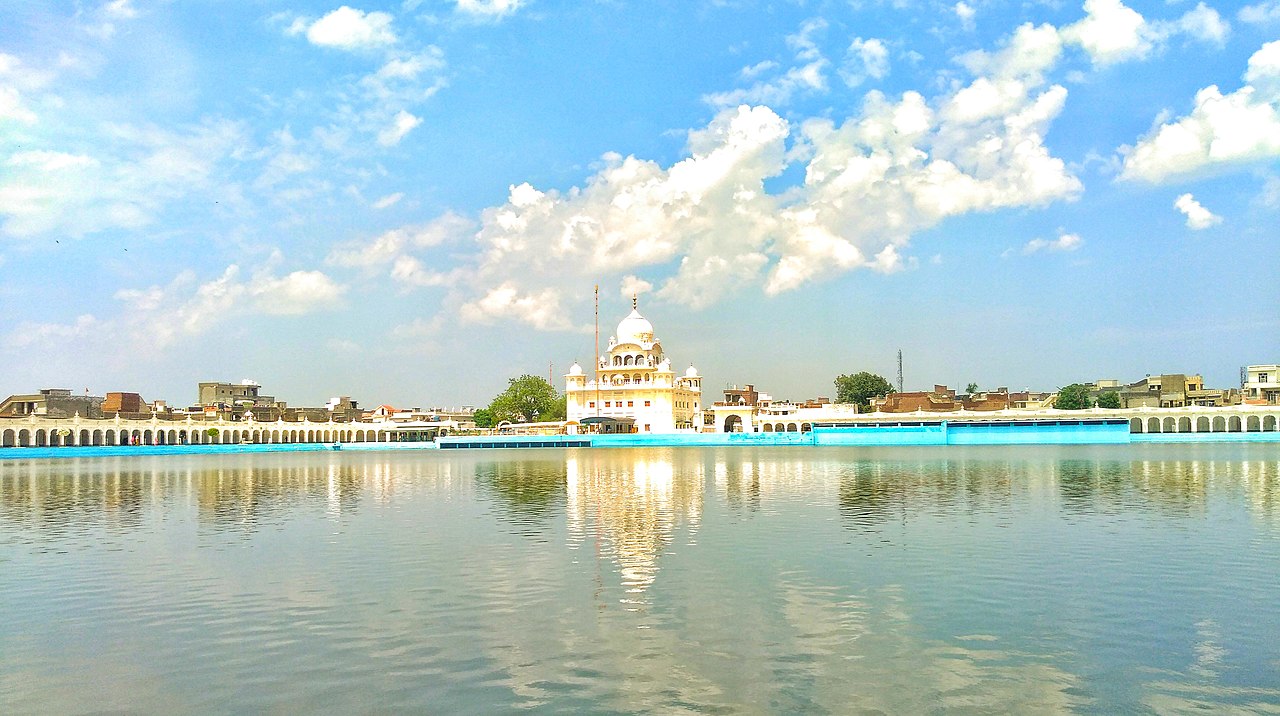
One of the five Takhts of Sikhism, in Talwandi Sabo about 28km from Bathinda. Free entry, open 24 hours, langar served through the day. Worth the half-day trip for the history, not just the architecture — Guru Gobind Singh compiled the Guru Granth Sahib's final recension here.

Working cotton and grain trading market near the railway line, busiest 7am-11am from October through February. No entry fee — this is a functioning market, not a tourist site, but walking through during trading hours shows the city's actual economy better than any museum would.
What to see
Hotels in Bathinda
No hotels are listed in Bathinda yet. The nearest ones are on the region page.
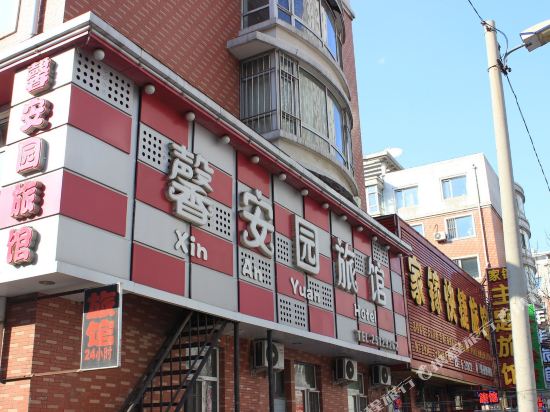
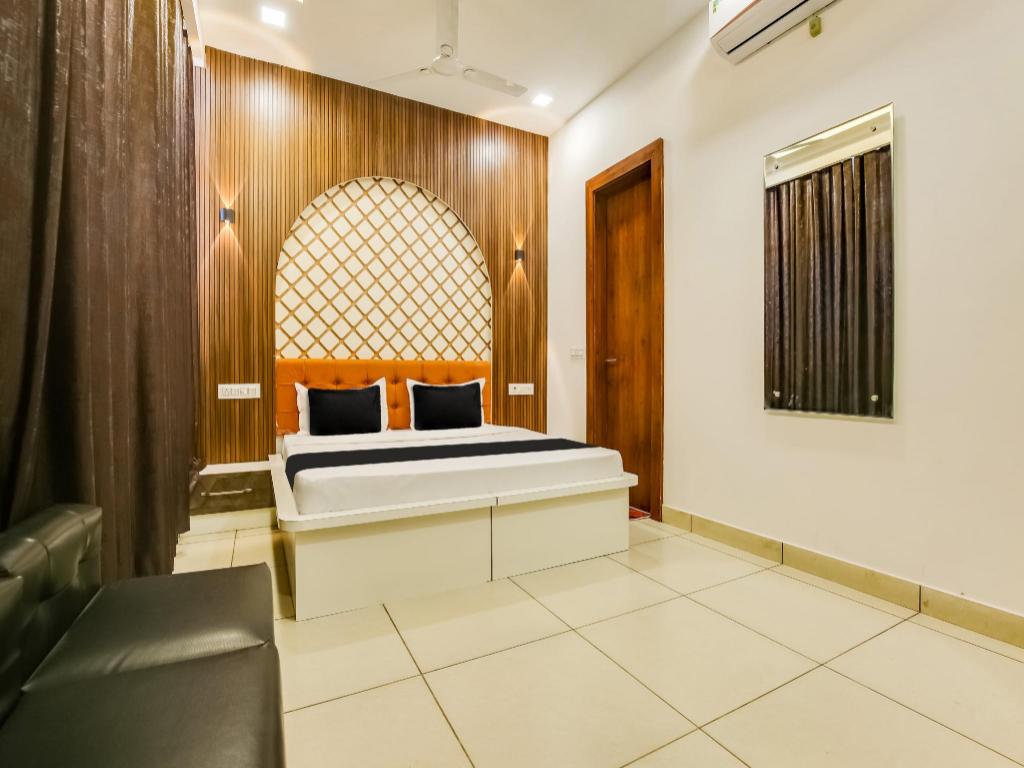

Every hotel we cover in Bathinda
- Comfort Inn Tulip Heights 3★ · 4.3/5
- Clarion Inn Stella 3★ · 4.2/5
- Hotel Bahia Heights 3★ · 4.2/5
- Hotel Sepal 3★ · 4.2/5
- Country Inn & Suites by Radisson Bathinda 4★ · 4.1/5
- OYO 15890 Hotel Sunciti Extension 2★ · 4.1/5
- Hotel Krishna Continental 3★ · 4/5
- Oyo 11632 Hotel Stay Inn Classic 2★ · 4/5
- OYO 2886 Hotel Satyam 2★ · 4/5
- Oyo 38787 Hotel Red Rose 2★ · 3.9/5
- OYO 14860 Hotel Silver Star 2★ · 3.8/5
- OYO 6939 Hotel Aashiana 2★ · 3.8/5
- Oyo 30127 Hotel Sabina International 3★ · 3.7/5
- OYO Rooms Bibi Wala Chowk 3★ · 3.7/5
- OYO 11844 Hotel Golden Halo 2★ · 3.7/5
- OYO 11882 Hotel Krishna 2★ · 3.7/5
- OYO 7609 Hotel Dolphin 2★ · 3.7/5
- OYO 3509 Hotel Celebration 3★ · 3.6/5
- OYO 2152 Hotel Bahia Fort 3★ · 3.5/5
- OYO 40853 Hotel Classic 2★ · 3.5/5
- OYO 3390 Hotel Imperial 2★ · 3.4/5
- OYO 12163 Hotel Aaryan 2★ · 3.3/5
- Oyo 3131 Hotel Br Inn 2★ · 2.5/5
- Grover international hotel 2★ · 0.6/5
Getting around Bathinda
Bathinda airport (25km, near Bhisiana/Virk Kalan) has limited flights to Delhi and Jammu — often cheaper and more reliable to train it. A taxi from the airport into the city runs ₹500-700. Bathinda Junction is a major railway hub — Delhi 6-8 hours ~₹850, Amritsar 4 hours ~₹580. Autos inside the city cost ₹80-160 for most trips, share-autos on Mall Road ₹20. The city bus stand near Mall Road handles regional buses to Muktsar, Faridkot and Barnala, usually ₹40-90 depending on distance. The city is spread over 8km so autos beat walking except in the fort area, where everything is within a 10-15 minute walk.
Questions about Bathinda
The core structure dates to roughly 90-110 CE, making it around 1,900 years old — one of the oldest surviving forts in India. Razia Sultan, the first female ruler of Delhi, was imprisoned here in 1240 CE. The current visible ramparts are much later renovations, but the base is genuinely ancient.
Yes, completely — it's a quiet cantonment city with a low crime rate. You’ll be stared at because tourists are rare, not because anyone means harm. Standard precautions: don’t wander around the industrial areas at night, book taxis through hotels rather than street-hail after dark.
October through February is best — daytime temperatures stay manageable, the Rose Garden is in bloom by February, and Bir Talab has its migratory birds. Summers, from April to June, push past 42°C and the walking tour and fort ramparts become genuinely unpleasant by mid-morning. Monsoon (July-September) is humid but rarely disruptive.
Bathinda to Amritsar is around 4 hours by train (~₹580) or by car via the Bathinda-Amritsar highway. Chandigarh is roughly 3.5-4 hours by road, with regular buses from the Mall Road bus stand costing ₹250-350. Neither city is a day-trip distance, so plan Bathinda as a stop on a longer route rather than a side trip.



.jpg?width=1280)