live inpunjab
Blog Area guides

A 3-day Amritsar itinerary that actually works
2026-08-045 min readcheaphotels
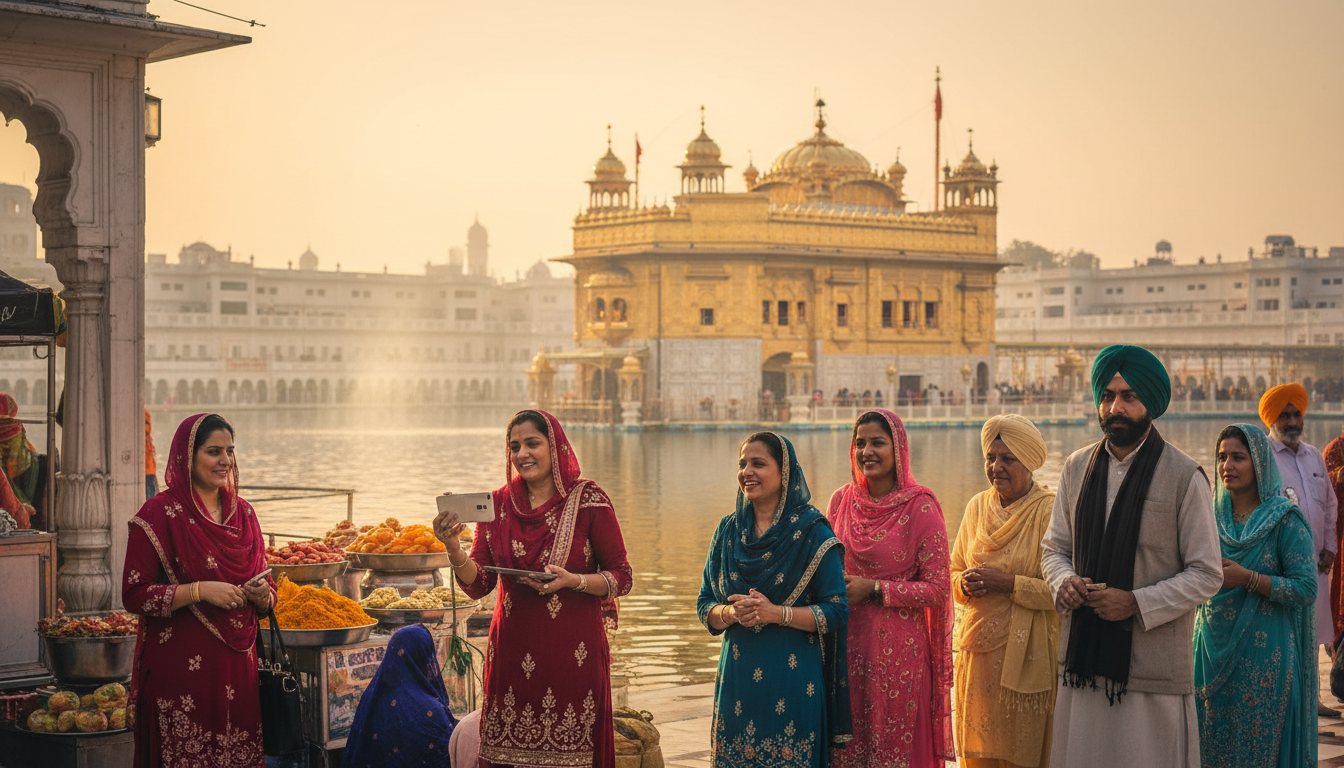
Golden Temple and the walled city of Amritsar at dawn Golden Temple and the walled city of Amritsar at dawn

Hour by hour across three days — when to hit the Golden Temple, how to fit Wagah, Jallianwala Bagh and the Partition Museum, and where to eat between them, planned around the heat.

How to think about three days in Amritsar

Three days is the right length for Amritsar. Two feels rushed; four is one too many unless you are carrying on to the hills. The city has a small core — the walled old city is about two miles across — and everything essential sits within a 45-minute drive of it: the Golden Temple, Jallianwala Bagh, the Partition Museum, and the Wagah border ceremony 18 miles west. You are not covering distance here; you are timing your day around two things, the crowds and the heat.

The single planning rule that changes everything: the Golden Temple is coolest and quietest between 9pm and 6am, and the plains are brutal from 11am to 5pm (April through September routinely hits 100-113°F). So this itinerary front-loads temple visits to dawn and late evening, parks the indoor sights (museums) in the hot middle of the day, and puts Wagah — which is outdoors on uncovered concrete stands — at sunset when it actually runs. Ignore the temperature and you will spend three days exhausted and sunburnt with half your list unseen.

Day 1 — arrive, settle, first temple visit at dusk

Aim to arrive by early afternoon. The Shatabdi Express from New Delhi departs at 7:20am and reaches Amritsar around 2pm ($18-25 in AC chair car, 6.5 hours); the flight is 75 minutes ($60-100). Check in, drop your bags, and if it is summer, do nothing until 5pm — nap or sit under AC. Fighting the 3pm heat on day one is how people get heatstroke on a trip that has barely started.

Head to the Golden Temple for your first visit around 5:30pm, walking in as the light drops. Leave your shoes at the free lockers, cover your head (free bandanas at the entrance if you forgot one), wash your feet at the entry trough, and just walk the marble parikrama (the walkway around the sacred pool) once, slowly. Do not rush to queue for the inner sanctum on the first evening — the line can be two hours. Sit by the water instead. Then eat an early dinner at Kesar da Dhaba in Passian Bazaar (thali about $4, the dal makhani and lachha paratha are the order). Come back to the temple at 9:30pm to see it illuminated and far emptier — this is the version of Harmandir Sahib people remember, gold on black water with the crowds thinned out.

Day 2 — dawn palki, Jallianwala Bagh, then Wagah at sunset

Set an alarm for 4am. The palki procession — the ceremonial carrying of the Guru Granth Sahib into the sanctum — runs around 4:30am, and arriving in the dark means you can join the inner-sanctum queue in 20-30 minutes instead of two hours. The pre-dawn marble is cool underfoot and the recitation over the water at first light is the best 40 minutes in the city. Back to the hotel by 7am for breakfast and, in summer, a second sleep through the worst of the morning heat.

Late morning, walk to Jallianwala Bagh — it is a 90-second walk from the temple's main entrance and takes about an hour (free entry). This is the walled garden where troops fired on an unarmed crowd in 1919; the bullet-marked wall and the memorial well are quiet, sobering, and essential context for everything the city is about. Lunch at Bharawan da Dhaba near the Town Hall (kulcha about $2, chole a must). Spend the hot early afternoon indoors at the Partition Museum on Town Hall Road (allow two hours, roughly $3 for foreign visitors) — it is the best museum in the state and mercifully air-conditioned.

Then Wagah. The flag-lowering border ceremony starts around 5:30pm in summer and 4:15pm in winter, and it is 45 minutes from the centre. Take a shared car ($6-8 per person) rather than a private taxi — the shared ride is part of the experience and everyone does it. Get there 90 minutes early for a seat; two hours early if you want the foreign-passport VIP section (free but limited). The ceremony is 45 minutes of high-kicking, flag-snapping nationalist theatre on both sides of the fence, and it is worth seeing once. Do not eat beforehand — traffic on the way back means dinner will not happen until 8:30pm or later.

Day 3 — the langar kitchen, the old city, and a slow finish

Day three is the one most visitors skip, and it is the one that lands. Go back to the Golden Temple complex mid-morning and walk into the Guru Ram Das Langar Hall — the free community kitchen that serves around 50,000 meals a day, more on weekends. There is no booking and no fee: roll up your sleeves and help. Rolling rotis with the volunteer line, stirring the dal cauldrons, or working the industrial plate-wash is the closest you will get to understanding what the temple actually is. Do this around 11am when a shift changes and there is room for guests, then sit on the floor of the dining hall and eat the langar meal yourself — vegetarian, unlimited, and the best simple daal-roti in Punjab.

Spend the cooler late afternoon walking the old city on foot. From the temple, thread through Guru Bazaar and the Hall Bazaar for phulkari embroidery and cloth, stop at Gurdas Ram Jalebi Wala for a bag of hot jalebis (about $1), and end at Beera Chicken House on Majith Mandi Road if you eat meat (a plate is around $6). If you have an evening train or a late flight, this pacing works perfectly — you finish full, on foot, in the part of the city that has the most life. If you have a fourth day and are heading north, a morning at the Durgiana Temple or a run out to the Ram Bagh gardens and Ranjit Singh's Summer Palace slots in without strain.

Where to base yourself for three days

The decision that shapes the whole itinerary is walkable-to-the-temple versus pool-and-AC on the GT Road. For a three-day trip built around dawn and late-night temple visits, I lean walkable — being able to stumble to Harmandir Sahib at 4:30am and back to bed by 6:30am is worth more than a pool. Four Leaf Hotels on Mall Road ($36, guest score 4.8) puts you a short auto ride from the old city with clean, simple rooms, and Stay Shaandaar ($33, 4.8) sits close to the temple side for pilgrims who want to be in the thick of it.

If you are travelling in the June-to-September heat, or with kids, weigh the trade the other way: the Radisson Blu on Airport Road ($62, 4.6) has the reliable air conditioning, breakfast and pool that make midday survivable, at the cost of a $6-8 taxi to the temple each way. All three are live bookable rates below. Book six weeks ahead for any November-to-February dates — wedding season tightens rooms and pushes prices up 30-50%.

Eating across three days without repeating yourself

Amritsari food is dhaba food, and the classics are close together. Over three days the non-negotiables are: kulcha at Bharawan da Dhaba or Kulcha Land ($2), dal makhani and paratha at Kesar da Dhaba ($4 thali), Amritsari fish fry and a chicken plate at Beera Chicken House ($6), and hot jalebis at Gurdas Ram in Guru Bazaar ($1). Add one lassi at Ahuja Milk Bhandar or Gian Chand — a full glass with malai on top is about $1.50 and functionally a meal.

The best meal in the city, though, costs nothing: the langar hall on day three. Eat there at least once and you will understand why the food ranking is a bit beside the point in Amritsar. If you want one sit-down dinner with air conditioning, Crystal Restaurant on Queens Road (about $12-15 a head) is the reliable choice. Skip the hotel buffets except for breakfast — the street and dhaba food is better and a fraction of the price.

Book while you read Median night$33 Cheapest area$14 Hotels tracked4 Find a hotel

Before you book

What people ask before booking Amritsar.

Is three days enough for Amritsar?

Yes — three days is the ideal length. It gives you two dawn temple visits, a full day for Jallianwala Bagh, the Partition Museum and Wagah, and a third day for the langar kitchen and the old city on foot without rushing. Two days works but feels tight; four is only worth it if you are day-tripping onward to the hills or want much slower meals.

When should I visit the Golden Temple to avoid crowds?

Between 4am and 6am, and again between 9pm and midnight. The dawn palki procession around 4:30am has the shortest inner-sanctum queue (20-30 minutes versus up to two hours by mid-morning), and the late-evening illuminated visit is atmospheric and far emptier. Midday is both the hottest and the most crowded — save it for indoor sights. The temple is open 24 hours.

How do I fit the Wagah border ceremony into the itinerary?

Put it at the end of day two. The ceremony starts around 5:30pm in summer and 4:15pm in winter and is 45 minutes from central Amritsar, so leave by mid-afternoon and arrive 90 minutes early for a seat. Take a shared car ($6-8 per person). Do not eat beforehand — return traffic pushes dinner to 8:30pm or later. Bring water and sunscreen; the stands are uncovered concrete.

What is the best area to stay for a 3-day trip?

Stay walkable to the Golden Temple — the Mall Road and Queens Road edge of the old city — so you can do the 4:30am and late-night visits easily. Options like Four Leaf Hotels ($36) or Stay Shaandaar ($33) work well. If you are visiting in the summer heat or with young children, the GT Road chains such as the Radisson Blu ($62) trade walkability for a pool and stronger air conditioning, with a $6-8 taxi to the temple.

Where to stay

Hotels in Amritsar

Live prices · free cancellation

Recommended reads

All posts