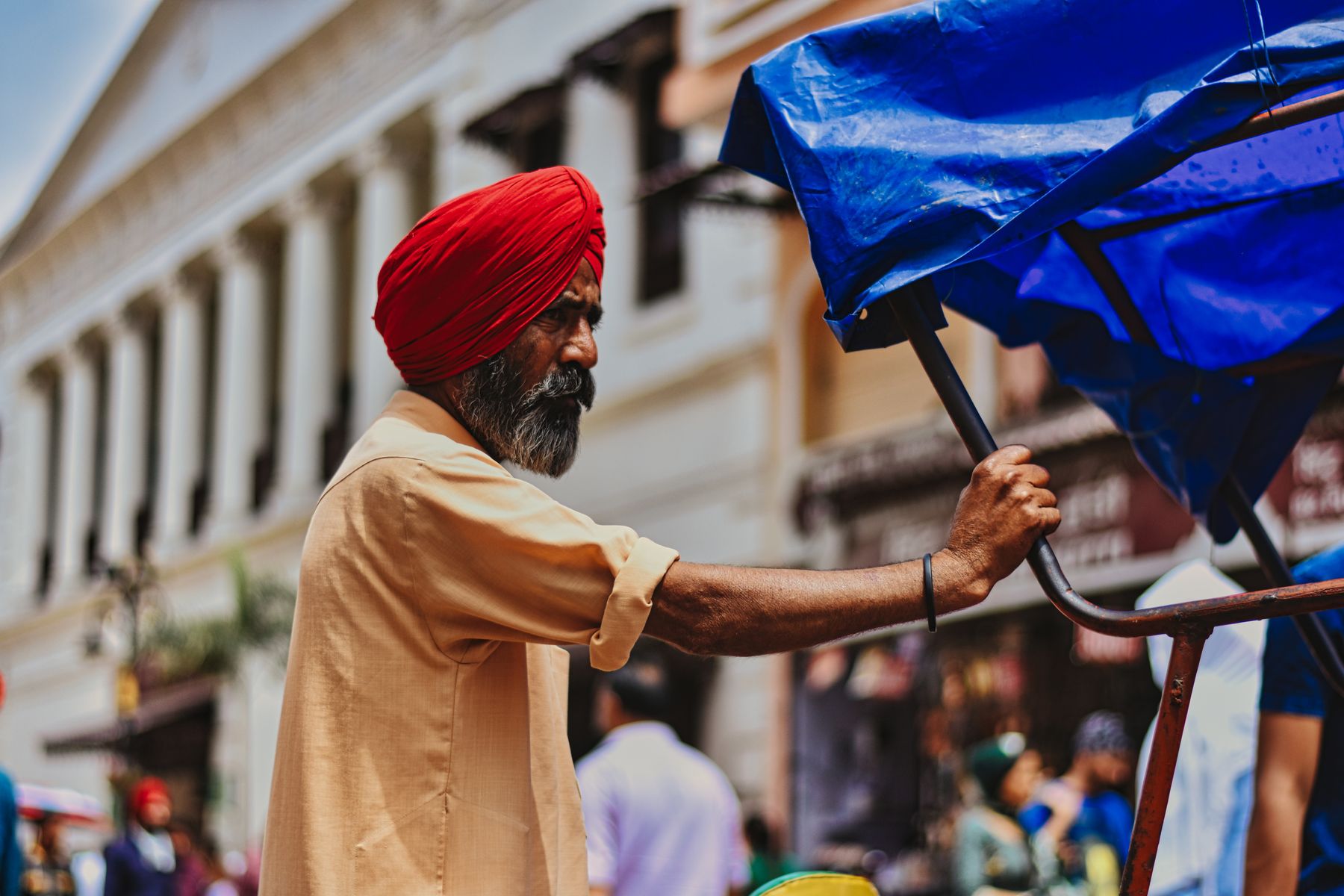
The 6 Best Walks in Punjab, Ranked
 Narrow lane in the walled city of Amritsar with old wooden balconies
Six walks worth putting on shoes for, from a walled-city labyrinth to a hill-top gurdwara circuit, ordered by what you’ll remember.
1. Amritsar walled city — Town Hall to Golden Temple via the katras
This is the walk that defines the region. Start at Town Hall (now home to the Partition Museum), enter the old city through Hall Gate, and let the katras — narrow lanes each historically devoted to a single trade — pull you toward the temple. You’ll pass jewellers on Guru Bazaar, cloth merchants on Katra Ahluwalia, and paper-and-print shops that have been in the same families for four generations. The route is maybe 1.5 km but it takes two hours because you keep stopping.
Go on a weekday morning, 8-10am, when shops are opening but the crowds haven’t arrived. Wear closed shoes; the lanes have open drains in places. Eat kulchas at Kulcha Land or All India Famous Kulcha near the temple, then finish at the temple itself. This walk ranks first because it compresses more of Punjab into a small area than anywhere else — the trades, the food, the religious geography, the survival of a pre-Partition urban fabric.
2. Chandigarh Capitol Complex circuit
Le Corbusier's Capitol Complex in Sector 1 is a UNESCO World Heritage site and one of the most significant modernist architectural landscapes in the world. The walking circuit takes you past the High Court, the Assembly, the Secretariat, and the Open Hand monument — huge concrete forms set against the Shivalik hills. It's not pretty in a conventional sense but it's important, and walking it is the only way to feel the scale of Corbusier's ambition.
Free guided tours run daily at 10am, 12pm and 3pm; you must book at the Chandigarh Tourism office one day ahead and carry passport ID. The circuit is about 2 km and takes 90 minutes with the guide. Go in winter — the site is exposed and there's no shade. Second place because it's essential for anyone interested in twentieth-century architecture or city planning, but the emotional register is intellectual rather than sensory.
3. Patiala Adalat Bazaar to Baradari Gardens
Patiala's old bazaar is what Punjab looked like before Partition unstitched half of it. Start at Adalat Bazaar with its brass and copper shops, walk through the jutti (embroidered shoe) sellers, past the Phulkari embroidery stalls, and out to the Sheesh Mahal and Baradari Gardens. The whole route is 3 km and takes half a day if you’re browsing. Patiala's craftsmen still make things by hand for local weddings, so this isn’t a preserved bazaar — it's a working one.
Best on a Saturday morning when the bazaar is busiest. Bargain politely; prices are already lower than tourist markets in Amritsar. Finish at the Baradari Gardens for a sit-down and, if you’re staying overnight, a Patiala peg at the Baradari Palace hotel bar (₹400-600 for a proper local pour). Third place because Patiala rewards patience — the walk gives up its pleasures slowly, and impatient walkers will find it just another bazaar.
4. Anandpur Sahib five-takht circuit
Anandpur Sahib has five gurdwaras associated with the founding of the Khalsa, and walking between them is a genuine pilgrim's circuit — not made-up for tourists. Start at Takht Sri Kesgarh Sahib (the central takht), walk down to Gurdwara Sis Ganj Sahib, then Gurdwara Guru Ka Mahal, Gurdwara Bhora Sahib, and finish at Gurdwara Anandgarh Sahib. Total distance around 3 km with elevation changes; give it three hours.
Do it on a normal weekday, not Hola Mohalla (March) when the town is packed with pilgrims and the walk becomes a shuffle. Eat langar at Kesgarh Sahib. The circuit ranks fourth because it requires real interest in Sikh history to land — otherwise it becomes a series of visually similar white marble buildings. But with even minimal context (read Khushwant Singh's short history first) it becomes profound.
5. Sukhna Lake perimeter walk, Chandigarh
Sukhna Lake was created in 1958 by damming the Sukhna Choe stream, and its 3 km perimeter walk is Chandigarh's morning ritual. Aunties in salwar-kameez powerwalk past joggers past retirees on benches; kites climb the thermals off the Shivaliks; sometimes a peacock crosses the path. It's not scenic in a grand sense but it's genuinely pleasant, and it shows you how Chandigarh actually lives outside its architectural photo ops.
Go at 6-7am in summer, 8-9am in winter. The regulatory end of the lake has a small bird sanctuary; the recreational end has boating. Free entry. Fifth place because it's less distinctive to Punjab than the walks above — you could get a similar experience in any well-planned Indian city — but it's the walk you’ll actually do if you’re staying in Chandigarh for two nights, and it's a good one.
6. Kapurthala palace and gurdwara walk
Kapurthala is the strangest small town in Punjab, thanks to Maharaja Jagatjit Singh who built his palace (the Jagatjit Palace, 1908) in French Beaux-Arts style. The walking circuit takes you from the palace (now a Sainik School, so exterior only) to the Moorish Mosque (a copy of the Koutoubia in Marrakech), to the Panch Mandir, and out to Gurdwara Ber Sahib. It's like a fever dream of colonial-era eclecticism, 2 km end to end.
Take a taxi from Jalandhar (30 km) and give yourself half a day. Nothing is well-preserved, most sites have limited access, and there's essentially no tourist infrastructure. Sixth place because the walk is patchy and requires you to be interested in the story more than the sights. But if princely-state history intrigues you, Kapurthala is Punjab's most surprising day out and this walk is the frame that holds it together.
Before you book
What people ask before booking Chandigarh.
Yes, in daylight hours and with normal precautions. The Amritsar walled city and Chandigarh circuits are both busy and well-populated. Sukhna Lake is fine at any hour. Patiala and Kapurthala are quieter — start earlier and dress conservatively. Anandpur Sahib is a pilgrimage town where solo women are unremarkable.
Amritsar walled city, without question. It's the densest, most characterful walk in the region and combines with the Golden Temple visit, the Partition Museum, and lunch at Kesar Da Dhaba into a full day. Chandigarh's Capitol Complex is second choice if you’re flying in and out of Chandigarh.
Cover your head at all gurdwaras (scarves available free at entrances). Remove shoes at each shrine — wear slip-ons. Trousers or long skirts, sleeved tops. Nothing revealing. Otherwise dress for the weather. Anandpur Sahib in summer gets brutally hot; wear light cotton and carry water even inside the complex.