Things to Do in Punjab: The Best Experiences Across the State, Ranked
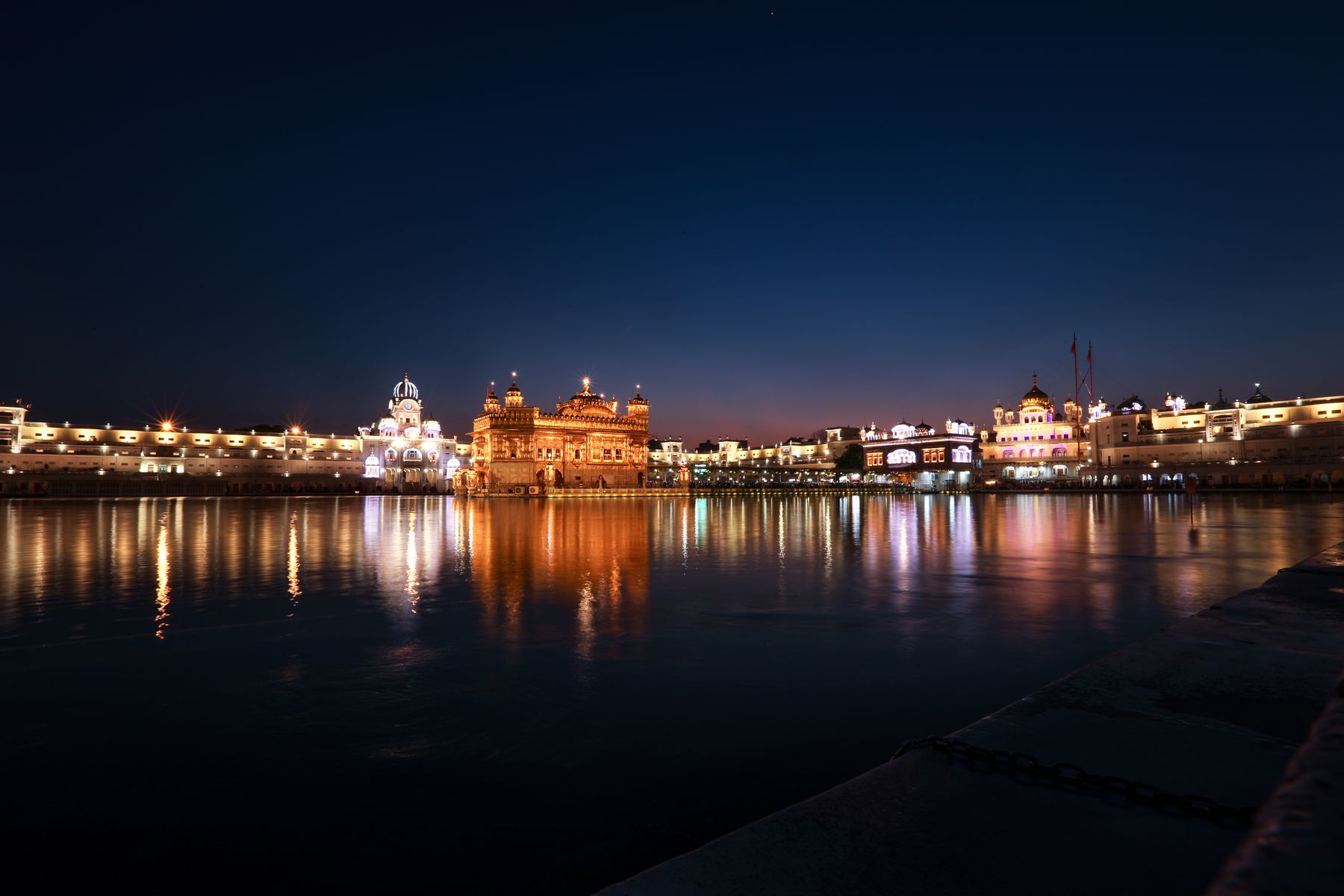 Pilgrims walking the marble parikrama around the Golden Temple sarovar in Amritsar
A state-wide plan for what actually earns your days in Punjab, from the Golden Temple at 4am to Chandigarh’s Rock Garden, Anandpur Sahib’s Sikh heartland and the mustard fields of Malwa — with drive times, prices and what to skip.
Start in Amritsar: Golden Temple, langar and Jallianwala Bagh
Amritsar is the one stop no Punjab itinerary skips, so treat it as the anchor and give it two full days. Reach Harmandir Sahib between 4:00 and 4:30am for the Palki Sahib procession, when the marble is cold, the sarovar is glass-still and the parikrama is nearly empty. Leave shoes at the free Joda Ghar, cover your head with the orange cloth handed out at the entrance, and stay for langar in the east-side hall, where a steel thali of dal, sabzi, roti and kheer is refilled until you cover the plate. It runs 24 hours and feeds around 75,000 people daily, entirely free.
Cluster the rest within 300 metres of the temple’s main gate: Jallianwala Bagh, where the 1919 bullet-marked wall and the narrow trapping lane survive, and the Partition Museum inside the restored Town Hall (₹250 foreigners, closed Mondays, allow 90 minutes) — the best museum in the state. Break for a stuffed aloo-pyaaz kulcha at Kulcha Land on Ranjit Avenue, around ₹120 for two, then walk the pedestrianised Heritage Street into the katras for jutti and phulkari. Book a hotel within walking distance of the temple; a room in the walled city beats the airport strip 11km out for early-morning access.
The Wagah border ceremony at Attari
The lowering-of-the-flags drill at the Attari-Wagah gate, 32km west of Amritsar on the NH3, is 45 minutes of high-kick theatre with real geopolitics under it. Leave your hotel by 3:30pm to clear the security lanes before the start — 5:15pm in winter, 6:15pm in summer. Foreigners get a faster queue on the right; carry your passport. Seating is free and unreserved on concrete bleachers that hold roughly 25,000, and the Border Security Force face off against the Pakistan Rangers across the line while both crowds chant on cue. Skip the VIP-pass touts outside; regular seating is perfectly fine if you arrive early.
Return traffic is the catch — cabs vanish the moment the gate closes, so arrange a round-trip fare (around ₹1,200-1,500) or share a car from your hotel and expect to be back in Amritsar by 8:30pm. In May and June the uncovered stands hit 43°C by mid-afternoon, so carry water and a cap and go in the last week of the month rather than the peak. If you have to choose between Wagah and a second Golden Temple visit at night, the temple wins; but Wagah is worth the drive once, and it pairs naturally with a late kulfi on Majitha Road afterwards.
Chandigarh: Rock Garden, the Capitol Complex and Sukhna Lake
Chandigarh, 230km southeast of Amritsar and four hours by car or train, is India’s cleanest planned city and a complete change of pace. Nek Chand’s Rock Garden in Sector 1 is the headline — a 40-acre secret kingdom of courtyards and waterfalls built illegally from industrial waste, broken bangles and ceramic shards over eighteen years. Entry is ₹30, open 9am to 6pm, and you need at least 90 minutes to walk it properly. It is genuinely unlike anything else in the country, so do not treat it as a filler stop; go early before the school groups arrive around 11am.
Ten minutes north, Le Corbusier’s Capitol Complex — the High Court, Secretariat and Assembly with the Open Hand monument — is a UNESCO World Heritage Site you can only enter on the free guided tour at 10am, noon and 3pm (carry photo ID; it sits near the Pakistan-facing sector so security is tight). Finish at Sukhna Lake for a sunset paddle-boat, then eat in Sector 35 or 17. Base yourself in Sector 22 or 35 for the best food-and-walkability trade-off; skip the pricier Industrial Area hotels unless you have a car.
Anandpur Sahib and the Sikh heartland
For the deepest Sikh history outside Amritsar, drive 90 minutes north of Chandigarh to Anandpur Sahib, founded by Guru Tegh Bahadur in 1665 and the birthplace of the Khalsa. Takht Sri Kesgarh Sahib, one of the five Takhts, holds weapons attributed to Guru Gobind Singh, and the Virasat-e-Khalsa museum below it is the single most impressive building in Punjab — Moshe Safdie’s steel-petalled complex opened in 2011, is free, closed Mondays, and needs two hours for its narrative galleries. Time your visit for Hola Mohalla in March if you can, when Nihang warriors stage mock battles and tent-pegging on horseback for three days.
From Anandpur it is a short run to Naina Devi temple in the Shivalik foothills and to the Bhakra-Nangal dam, one of the tallest gravity dams in the world at 226 metres, viewable from the Nangal side. If Sikh heritage is your theme, string together the wider Five Takhts route — Damdama Sahib at Talwandi Sabo in the far south and Fatehgarh Sahib near Sirhind, where the younger Sahibzade were martyred and the December Shaheedi Jor Mela draws lakhs. Stay a night in Rupnagar or Anandpur itself; day-tripping the whole loop from Chandigarh wastes half of it in the car.
Patiala, the royal south and Punjab’s food trail
The Malwa south is where the maharajas built, and Patiala — two hours south of Chandigarh — is its showpiece. Qila Mubarak is a sprawling 18th-century fort complex in the old city, and the Sheesh Mahal within Motibagh Palace holds Kangra miniatures, medals and chandeliers collected by Maharaja Bhupinder Singh. This is also the home of the Patiala peg and the phulkari embroidery you will see draped in every bazaar. Combine it with Aam Khas Bagh at Sirhind, a restored Mughal serai on the Grand Trunk Road (open October to June) where seventy-year-old mango trees still fruit over the garden pavilions.
Punjab is a food destination in its own right, so build meals into the plan rather than treating them as refuelling. The classic dhaba pilgrimage is Kesar da Dhaba and Bharawan da Dhaba in Amritsar for dal makhani and lachha parantha, but the roadside legends line the GT Road: Puran Singh’s mutton at Ambala’s edge and the truckers' dhabas around Doraha and Khanna. In Ludhiana and Jalandhar seek out working-farm kitchens like Tikka Junction, 18km north of Jalandhar, where paneer is set that afternoon and rotis bake over cow-dung fire; a full meal runs about ₹1,400. Eat kulfi and faluda late — Punjab’s night-food strips outlast its monuments.
The plains, the wetlands and the festival calendar
Punjab is farmland, and the countryside itself is an attraction if you time it. From late November into February the mustard fields across Malwa turn a sheet of yellow — the classic sarson-da-saag backdrop — best seen driving the back roads around Ludhiana, Moga and Bathinda rather than the highways. Harike Wetland, 60km southeast of Amritsar where the Beas and Sutlej meet, is a Ramsar site that draws over 90 species of migratory birds from December to February; hire a boat at the barrage for a two-hour dawn trip and skip the midday heat, which even in winter can hit the mid-20s°C.
Plan around the festivals and the season decides itself. Baisakhi in mid-April fills every gurdwara and fairground; the Kila Raipur Rural Olympics near Ludhiana in early February is a raucous three days of bullock-cart races, tractor stunts and tent-pegging worth planning a trip around; and the Chappar Mela and Roshni Mela punctuate the calendar with village colour. Avoid June’s 45°C peak and the July-September monsoon for outdoor plans, when humidity and roadworks make the plains grim. October to March is the answer for almost everything here: mustard in bloom, birds on the water, dhaba weather, and cool mornings on the temple marble.
Before you book
The questions people ask about Amritsar, answered with this month’s numbers.
Five to seven days covers it comfortably. Give Amritsar two days for the Golden Temple, Jallianwala Bagh, Partition Museum and Wagah, one day in Chandigarh for the Rock Garden and Capitol Complex, one for Anandpur Sahib, and one or two for Patiala, the dhaba trail and the countryside. Three days forces you to pick Amritsar plus one other cluster.
October to March, without much argument. Winter brings mild days in the low-to-mid 20s°C, mustard fields in full yellow from late November, and migratory birds at Harike from December to February. Avoid the April-June heat, which climbs past 43°C, and the July-September monsoon, when humidity and flooded back roads spoil outdoor plans and the plains turn muggy and grey.
Yes for the main cities. Fast trains link Amritsar, Jalandhar, Ludhiana, Chandigarh and Patiala, and shared autos and app cabs cover the towns. Where you genuinely need a car is Anandpur Sahib, Harike Wetland and the mustard-field back roads — rural sites with thin public transport. Hire a car with driver for those legs, roughly ₹2,500-3,500 a day, and rely on trains between the cities.
The Golden Temple in Amritsar at dawn, followed by langar. Arrive at 4am for the Palki Sahib procession while the parikrama is empty, eat in the free dining hall, then walk to Jallianwala Bagh and the Partition Museum, all within 300 metres. That single morning delivers the essence of Punjab; add Wagah at sunset if the day allows.
Absolutely. Chandigarh’s Rock Garden and Le Corbusier architecture, Anandpur Sahib’s Virasat-e-Khalsa museum, Patiala’s palaces and phulkari, the Kila Raipur rural sports and the birdlife at Harike all reward the extra days. Amritsar is the flagship, but treating it as the whole state sells Punjab short — the Malwa south and the Sikh heartland are quieter and just as rewarding.