Gurdwara Baba Deep Singh Shaheed
Where the 75-year-old warrior-saint fell, head in one hand and khanda in the other.
 White dome of Shaheed Ganj Baba Deep Singh gurdwara
What to expect at Gurdwara Baba Deep Singh Shaheed
Gurdwara Shaheed Ganj Baba Deep Singh marks the spot where the great eighteenth-century scholar-warrior Baba Deep Singh, at the age of 75, fell fighting Ahmad Shah Abdali's forces in 1757 after they had desecrated the Golden Temple. Tradition holds that after being mortally wounded he continued fighting with his severed head balanced on his left hand and his 32-kilo double-edged khanda in his right, until he reached the parikrama of Harmandir Sahib and laid down his head there. He is one of the most revered figures in Sikh history and the site is a required stop for anyone spending more than a day in Amritsar.
The gurdwara is much smaller than the Golden Temple itself — a single white marble hall over the martyrdom site — but it houses the original weapons of Baba Deep Singh: the 32-kilo double-edged khanda, a spear, and personal items. The scale of the khanda is what stops most visitors; it is bigger than most modern people can lift with two hands. Kirtan runs continuously and langar is served in a small hall behind the main building.
The gurdwara is a seven-minute walk south of the Golden Temple through the old-city lanes, so most visitors chain it with Baba Atal Sahib and the main shrine into a single loop. Head covering required, shoe stand free. Come mid-afternoon when the Golden Temple crowds peak — this shrine will be quiet even then. The narrow lanes around it are full of langar volunteers making chapati flour deliveries by cycle-rickshaw.
Knowing the man makes the forty-five minutes land properly. Baba Deep Singh was born in 1682 at Pahuwind, about 35 km south of here in what is now Tarn Taran district, took amrit at Anandpur Sahib in 1700, and spent decades as a scribe rather than a soldier — he worked alongside Bhai Mani Singh preparing copies of the Guru Granth Sahib and is remembered as the first head of the Damdami Taksal at Talwandi Sabo. The famous line drawn with the khanda was drawn at Tarn Taran, 25 km down the road, when he pledged that his body would reach Amritsar. Read that much before you arrive, because the shrine itself carries almost no interpretation in English: there are no wall panels, no dates, no audio guide. Five minutes of reading turns a plain marble hall into the most affecting stop in the old city.
The approach is on foot and that is no hardship. From the Golden Temple's clock-tower entrance, collect your shoes, keep the sarovar wall behind you and head south past the nine-storey tower of Baba Atal Sahib; Chowk Shahidan and the white dome are 700 m and seven to nine minutes on, through lanes barely wide enough for two cycle-rickshaws to pass. From Amritsar Junction railway station, 2.5 km north-west, an e-rickshaw is ₹50-₹80, an auto ₹100-₹150 after the usual haggle, and an app cab ₹120-₹200 — but vehicles are stopped well short of the door, so you walk the last stretch regardless. From Sri Guru Ram Dass Jee International Airport at Raja Sansi, 13 km out, a prepaid taxi is ₹700-₹900 and 35-45 minutes in traffic. Skip the car for this leg: park once at the multi-level lot behind Jallianwala Bagh and do the whole loop on foot.
There is no ticket counter here and there never has been one. Entry is free, the jorha ghar that takes your shoes is free and gives you a numbered token, langar in the hall behind is free, and the sewadars will not accept a tip for any of it — the golak by the sanctum takes whatever you choose, and ₹10 or ₹50 is entirely normal. Head covering is compulsory for everyone; there is usually a basket of clean cotton scarves at the entrance, or buy a printed bandana on Heritage Street for ₹20-₹50 after the stallholder opens at ₹100. Bottled water outside runs ₹20. Ignore the guides who work the Golden Temple gates offering a full-city tour for ₹1,000-₹2,500: there is nothing here that a guide can unlock. Budget ₹100 for the entire visit and you will come home with change.
Hour by hour, the shrine opens at 05:00 with cool marble and almost nobody in it, fills gently between 07:00 and 10:00 as pilgrims work their way down from Harmandir Sahib, empties again around midday, and is at its quietest between 14:00 and 16:00 — which is precisely when the Golden Temple parikrama is at its most crowded. Local families come after work, so 18:00 to 20:00 is busy again before the 22:00 close. Month by month, October to March is the season: dry, 12-25°C, comfortable underfoot. Avoid the days either side of the November barsi and Guru Nanak Gurpurab, when the whole quarter is a slow-moving crowd, and the Bandi Chhor Divas nights in October or November when Amritsar is at capacity. May and June hit 42-45°C and the open marble is genuinely painful barefoot from 11:00 to 16:00; come at 05:30 instead.
It suits anyone who reads history and anyone travelling with children who have run out of patience for a third hour of parikrama — the weapons case does in ninety seconds what a museum label cannot. Teenagers who found the Golden Temple overwhelming usually prefer this quieter hall. On a wet afternoon it works well, since the shrine is covered and the walk from the Golden Temple can be done under shop awnings for much of the way. Wheelchair users should be warned: the shrine is manageable but the lanes leading to it are narrow, broken and shared with rickshaws and delivery carts, so you will want a strong pusher and a dry day. If you have only an hour before a train, do this only if you are already at the Golden Temple; the station is another 2.5 km and 15-20 minutes by e-rickshaw.
Fold it into a half-day. Baba Atal Sahib is 350 m and four minutes back up the lane — nine storeys, free, and the best rooftop view of the Golden Temple in the city. Gurdwara Ramsar Sahib, where the Adi Granth was compiled in 1604, is about 500 m east and is the calmest shrine in Amritsar. The Golden Temple is 700 m, Jallianwala Bagh about 900 m, and the Partition Museum in the old Town Hall roughly 1.2 km, its modest ticket the only paid entry in the loop. For lunch, Kesar da Dhaba in Chowk Passian is 800 m away and a thali runs ₹200-₹350; Bharawan da Dhaba near Town Hall is similar. If you want to sleep inside the walking radius, Hotel Puri Palace Amritsar and Tejas Homestay Just 2 Minutes From Golden Temple are the practical choices, with Taj Swarna Amritsar the splurge a short drive out.
Two honest warnings. First, do not arrive expecting a monument on the scale of the story — this is one marble hall, a glass case and a langar kitchen, and visitors who budget two hours end up standing about. Forty-five minutes is right; the weight is in what happened here, not in what is built here. Second, Amritsar has more than one shrine with Shaheed Ganj in its name, and rickshaw drivers regularly deliver people to the wrong one. Say Baba Deep Singh, Chowk Shahidan, or show the map pin. Photography inside the sanctum and of the weapons case may be restricted depending on the sewadar on duty, so ask before you raise a phone. Tobacco is absolutely prohibited on the premises, as everywhere in Sikh shrines, and there is no cloakroom here — leave bags at the Golden Temple's free facility before you walk down.
Questions about Gurdwara Baba Deep Singh Shaheed
Free entry, free langar, free shoe stand. There is no ticket counter, no camera fee and no charge for the numbered token at the jorha ghar, and sewadars will not accept tips. The golak beside the sanctum takes voluntary donations — ₹10 to ₹50 is ordinary and nobody watches what you give. Your only real spending is a head covering if you did not bring one, ₹20-₹50 for a printed bandana on Heritage Street, and water at ₹20. Budget ₹100 for the whole visit.
All open hours; 05:00-22:00 daily. Because nothing here is ticketed, there is no such thing as a paid window or a cheaper slot — the shrine, the weapons case, the martyrdom platform and the langar hall are free from the moment the doors open to the moment they close. Langar is served through the day in the hall behind the main building; sit on the floor in rows and take what is offered. The only cost of coming at a popular hour is time spent in the crowd.
About 45 minutes. That covers the main hall and a few minutes sitting with the kirtan, a slow look at the 32-kilo khanda and the other weapons in the glass case, the martyrdom platform, and langar if you eat. Add 15-20 minutes if you walk down from the Golden Temple and back rather than arriving directly. Visitors who plan two hours here generally end up idle — the shrine is one building, and its weight is historical rather than architectural.
Never closed — open every day. Doors are open 05:00-22:00 through the year, including festivals, and there is no weekly rest day or annual shutdown. The one time to plan around is the barsi in November, marking the 1757 martyrdom, when the shrine and the surrounding lanes fill with pilgrims and simply reaching the weapons case can take 45 minutes or more. Guru Nanak Gurpurab and Bandi Chhor Divas fill the whole quarter too; go early on those mornings or pick another day.
None required. There is no online ticket, no registration desk, no timed entry and no guided tour to reserve — you walk in, cover your head, leave your shoes at the free stand and go through. Decline the freelance guides who work the Golden Temple gates offering a city circuit for ₹1,000-₹2,500; there is nothing here for them to interpret and no queue for them to jump. If you want context, read up on Baba Deep Singh's life before arriving, since the shrine carries no English signage.
Walk 700 m south from the Golden Temple; no separate stop needed. That is seven to nine minutes through the lanes past Baba Atal Sahib. From Amritsar Junction railway station, 2.5 km away, an e-rickshaw is ₹50-₹80, an auto ₹100-₹150 and an app cab ₹120-₹200, but vehicles are stopped short of the shrine so you finish on foot. From the airport at Raja Sansi, 13 km, a prepaid taxi is ₹700-₹900. Park once behind Jallianwala Bagh and walk the loop.
Hotels near Gurdwara Baba Deep Singh Shaheed
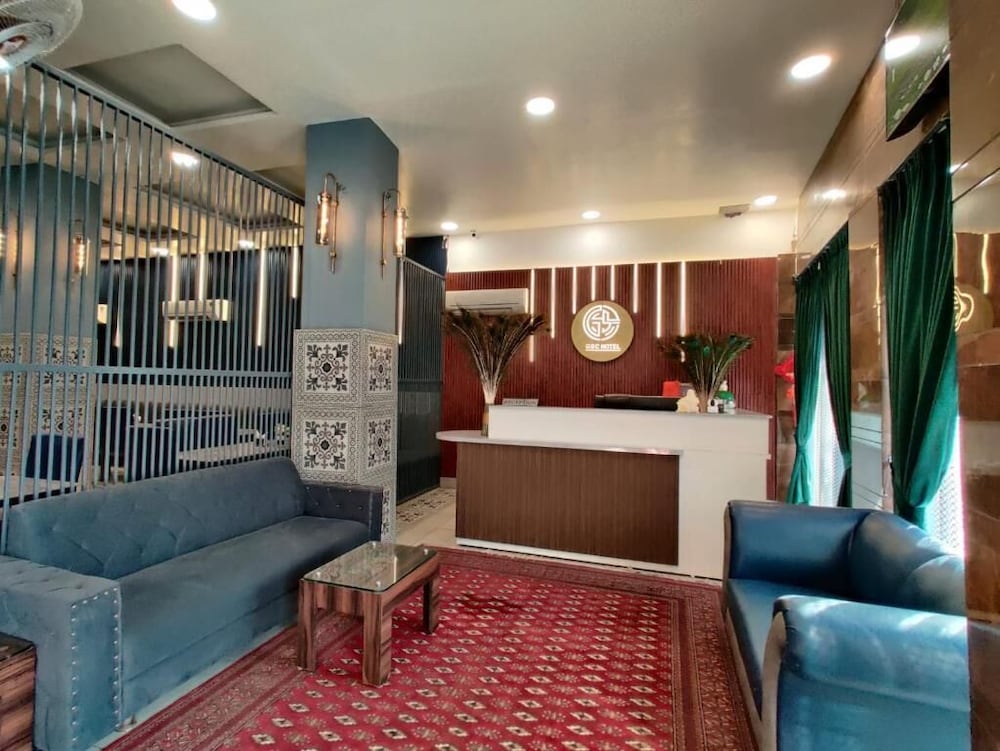
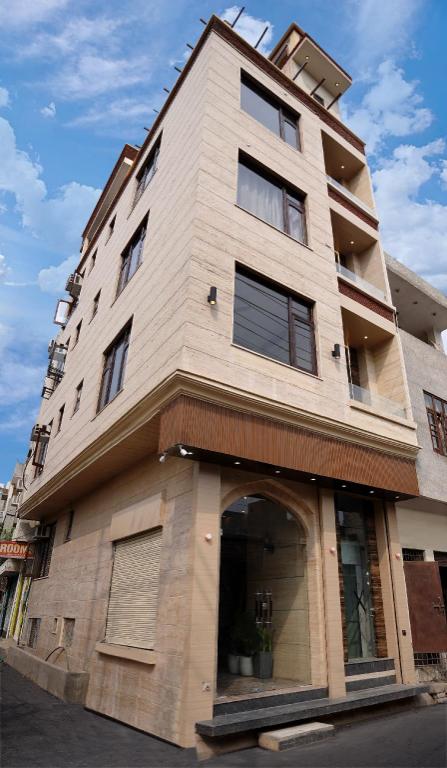
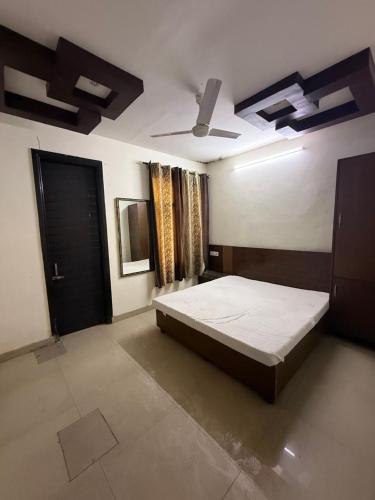
Every hotel we cover in Amritsar
- Tirathsheela Homestay 0.1 km away
- Hotel Guruji residency 3★ · 0.2 km away
- One Earth GG Regency 3★ · 4.5/5 · 0.3 km away
- Wood Yard Villa Three Hundred Metres From The Golden temple 3★ · 0.3 km away
- Fabhotel Nirvana Grand By Io 3★ · 0.3 km away
- Nutz Backpackers 0.3 km away
- goSTOPS Amritsar Golden Temple 3★ · 0.3 km away
- Hotel G R Residency Golden Temple Just 2 Mins Walking Distance From Hotel 2★ · 0.3 km away
- Hotel SB Residency 3★ · 0.4 km away
- Hotel Heaven View 3★ · 4/5 · 0.4 km away
- Hotel Akaal Heights 3★ · 0.4 km away
- Guru Kalgidhar Residency 2★ · 4/5 · 0.4 km away
- Blue Eye Backpackers Hostel 4★ · 0.4 km away
- Hotel S.S Royal 3★ · 4.5/5 · 0.4 km away
- Hotel Akaal Residency 1★ · 3.9/5 · 0.4 km away
- Punjabi Niwas 4★ · 4.1/5 · 0.4 km away
- Suman castle Hotel 2★ · 0.4 km away
- Wow Backpackers Hostel 3★ · 0.4 km away
- Hotel Golden Paradise 0.4 km away
- Goroomgo Guru kripa guest house Amritsar 2★ · 0.5 km away
- Oyo 29417 Ms Guest House 3★ · 0.5 km away
- 4N Homestay Golden Temple View 4★ · 0.5 km away
- Naman Homestay 3★ · 0.5 km away
- Golden Pearl Infront Golden Temple Gate 3★ · 0.5 km away
More things to do
All things to do


From the journal
All posts Comparisons & rankings
Hotels with pools in Punjab, ranked
Comparisons & rankings
Hotels with pools in Punjab, ranked
A working shortlist of 9 hotels across Amritsar, Chandigarh, Ludhiana and Mohali where the pool is genuinely usable — not a puddle behind the generator shed.
 Comparisons & rankings
Family-friendly hotels in Punjab, ranked
Comparisons & rankings
Family-friendly hotels in Punjab, ranked
Ten hotels across the state where kids under 10 will not lose their minds and parents will not either — with real notes on pools, kids' menus, and connecting rooms.
 Comparisons & rankings
Family hotels in Amritsar: which belt to book by your kids' ages
Comparisons & rankings
Family hotels in Amritsar: which belt to book by your kids' ages
Amritsar’s family rooms cluster in three belts — Ranjit Avenue near the malls, the Golden Temple walk, and the Airport Road pools — and the right one depends on how old your kids are.