Golden Temple (Sri Harmandir Sahib)
Sikhism's holiest gurdwara, gold-clad and floating on a still tank of nectar.
 Golden Temple reflected in the sacred Amrit Sarovar tank
What to expect at Golden Temple (Sri Harmandir Sahib)
Sri Harmandir Sahib, universally known as the Golden Temple, is the spiritual centre of the Sikh faith and one of the most visited religious sites on earth. Built by Guru Arjan Dev at the end of the sixteenth century and rebuilt in marble and gilded copper by Maharaja Ranjit Singh in the early 1800s, the temple sits low in the middle of the Amrit Sarovar, so pilgrims descend to it rather than climb up. The doors open on all four sides as a statement that the sanctuary welcomes every caste, creed and country, and that openness is what visitors remember long after the gold. Guru Ram Das had the tank excavated in the 1570s and the city of Amritsar grew outward from its banks, which is why every lane in the walled old town still funnels back to this square. The gold itself is leaf and foil over copper sheet, roughly 750 kg of it, re-laid panel by panel by volunteers rather than contractors.
A visit begins at the shoe deposit and the shallow foot-wash channel, after which you cover your head and step onto the cool marble parikrama that rings the tank. The queue along the Guru's Bridge feeds you into the sanctum where the Guru Granth Sahib is read live, kirtan drifting out over the water day and night. Off the parikrama you can climb to the Sikh Reference Library, watch pilgrims bathe at the ghats, and join the langar hall where fifty thousand people a day are fed free chapatis, dal and kheer on steel plates. Walk clockwise and you pass the Ath-Sath Tirath, the Dukh Bhanjani Ber where the sick still dip, the enclosed women's bathing steps on the east side, and the Akal Takht rising opposite the sanctum. Collect karah prasad from the counter by the Darshani Deori on the way out; a token costs from ₹10 upward.
Come before sunrise or after nine at night when the gold glows against black water and the crowds thin. Dress modestly, cover your head with the orange scarves handed out at the entrance, and leave large bags at the free cloakroom on Heritage Street. The Partition Museum and Jallianwala Bagh are both a five-minute walk away, so most visitors chain the three together. Photography is allowed on the parikrama but not inside the sanctum, and you can volunteer in the langar kitchen by simply picking up a stack of plates. Ignore the hawkers selling headscarves for ₹20 on the approach — the ones at the gate cost nothing — and ignore anyone offering a paid guided tour or a fast track to the sanctum. Neither exists, and the men selling them are touts.
Getting here is short and cheap from anywhere in central Amritsar. From Amritsar Junction railway station it is 2 km: a shared e-rickshaw runs about ₹30 to ₹50 a seat, a private auto-rickshaw ₹100 to ₹150, and the walk down Queen's Road through Hall Bazaar to the Town Hall takes 25 to 30 minutes through some of the city's best street food. The interstate bus stand on GT Road is a similar distance. Sri Guru Ram Das Jee International Airport at Raja Sansi is 11 km north-west, roughly 30 minutes and ₹600 to ₹800 by prepaid taxi. No vehicle reaches the gate — Heritage Street, the 500 m pedestrian boulevard from the Town Hall, is closed to traffic. Park in the multi-storey car park behind it, pay the nominal charge, and take the free shuttle or simply walk the last eight minutes.
The money question is unusually simple: there is none. Entry is free, the shoe deposit is free, the head covering is free, drinking water and the langar meal are free, and the wheelchairs kept at the gates for elderly pilgrims are free. Everything runs on the golak donation boxes and on volunteer labour. What you may genuinely spend is a karah prasad token from ₹10, parking of a few tens of rupees, and whatever you drop in a donation box. The SGPC sarais beside the complex — Guru Ram Das Niwas, Sri Guru Nanak Niwas and Baba Deep Singh Niwas — offer dormitory beds free and simple rooms for a nominal charge, first-come and normally capped at three nights. Skip the ₹500 self-appointed guides at the clock tower; the information office inside answers the same questions for nothing.
Time your visit by the hour and it becomes a different place. The Palki Sahib procession around 4:00 and the hour after it are the emptiest and most moving window of the day, and the marble is cold underfoot. Coach groups arrive from 7:00, the sanctum queue thickens through the morning, and the heaviest crush is between 18:00 and 20:30. After 21:30, once the Sukhasan approaches, the parikrama empties again. By month, October to March is the season: clear light, 8 to 25°C, though December and January bring dense dawn fog. April to June hits 40 to 45°C and the marble scorches, so sevadars lay coir matting and spray the walkway — go at night instead. Monsoon from July to September is humid and the marble turns slick. Diwali and Guru Nanak Gurpurab in November draw the largest crowds of the year.
It suits almost everyone, with caveats. Families do well here: children are welcomed everywhere, the langar hall feeds them in fifteen minutes, and the fish in the sarovar hold attention longer than any museum case. Wheelchair users find flat marble the whole way round the parikrama and free chairs plus sevadar help at each gate, though the descent to the sanctum involves steps and the upper storeys have no lift. Teenagers who are bored by monuments come alive in the dish line at Guru Ka Langar, where a ten-minute shift beats any amount of looking. With only an hour before a train, do the parikrama loop and the langar and skip the bridge queue entirely. If you want silence for private meditation, the sanctum is not it — the line keeps moving.
Fold the rest of the old city into the same half day. Jallianwala Bagh, site of the 1919 massacre, is a five-minute walk through a narrow lane off the temple square and free to enter. The Partition Museum occupies the restored Town Hall at the top of Heritage Street, two minutes further, and is the one ticketed stop in the cluster; it closes on Mondays, so plan around that. Kesar Da Dhaba in Chowk Passian is about ten minutes on foot for dal makhani and parathas in ghee, Bharawan Da Dhaba sits by the Town Hall, and Ahuja Milk Bhandar and Gurdas Ram Jalebi Wala are both inside the same warren of lanes. Hall Bazaar and Katra Jaimal Singh sell phulkari and juttis. Gobindgarh Fort is 2 km south-west and ticketed; the Attari-Wagah border ceremony is 28 km west.
The honest caveats are worth hearing before you come. The bridge queue for the sanctum runs 20 minutes at dawn but 90 minutes to two hours on a festival evening, largely without shade, and it buys you perhaps a minute inside before the flow carries you on — most people find the parikrama and the langar the deeper experience. The gold is gilt over copper, not bullion, and the temple does not float; that is an angle and a still morning. The tank is for bathing at designated ghats, not for swimming or drinking, and the women's steps are screened for a reason. In the langar, eat what is served and do not photograph people mid-meal. On Bandi Chhor Divas the complex holds crowds well past 100,000 — beautiful, but not the day for a first visit.
Questions about Golden Temple (Sri Harmandir Sahib)
Nothing. Entry, head-scarves, shoe deposit, drinking water and the langar meal are all free, funded by donations. The only rupees you are likely to part with are a karah prasad token from ₹10 at the counter near the Darshani Deori, a nominal parking charge at the Heritage Street multi-storey, and whatever you choose to drop in a golak donation box. Free wheelchairs and a free cloakroom for large bags are also available. Anyone charging ₹500 for an official guide or a queue-skip is a tout — neither service exists here.
Always — the temple is open and free 24 hours a day, every day of the year. There is no paid tier and no ticketed evening slot, so the only question is which free hours you want. The window from the Palki Sahib procession around 4:00 until roughly 6:00 is the quietest and coolest, and after 21:30 the parikrama empties again ahead of the nightly Sukhasan. Langar runs right through the night, so a 2:00 arrival still gets you a hot meal on a steel plate.
Plan three to four hours to include the parikrama, the sanctum queue, langar and the surrounding museum. Budget roughly 25 minutes for one clockwise circuit of the tank, 20 minutes to two hours in the bridge queue depending on the day and hour, 30 minutes for langar including the dish line, and 30 minutes for the Central Sikh Museum above the clock tower gate. Add another 30 for Jallianwala Bagh next door. With only an hour before a train, do the parikrama and langar and skip the sanctum.
No, it never closes, though the inner sanctum shuts briefly for the nightly Sukhasan ceremony around 22:30. The Guru Granth Sahib is carried in its palanquin to the Akal Takht and brought back at Prakash the next morning, and the parikrama, sarovar and langar hall stay open throughout. There is no weekly closing day and no seasonal shutdown; occasionally the tank is drained for kar seva. Security tightens for a few days around early June and on national holidays, which means longer bag checks rather than closed gates.
No booking is needed for pilgrims or tourists; just arrive, cover your head and join the queue. There are no tickets, no online slots and no priority line of any kind. Accommodation is the only thing worth arranging: the free sarais beside the complex, including Guru Ram Das Niwas and Sri Guru Nanak Niwas, are first-come with a three-night cap, and hotels near the temple such as Bloom Hotel Heritage Walk or SureStay Hotel by Best Western Heritage Walk fill weeks ahead around Gurpurab, Baisakhi and Bandi Chhor Divas.
Amritsar Junction railway station is 2 km away; free shuttles run from the multi-storey car park on Heritage Street. From the station expect ₹30 to ₹50 a seat in a shared e-rickshaw, ₹100 to ₹150 for a private auto, or a 25 to 30 minute walk via Queen's Road and Hall Bazaar. The interstate bus stand on GT Road is a similar distance, and the airport at Raja Sansi is 11 km, about ₹600 to ₹800 by prepaid taxi. No vehicle reaches the gate: the final 500 m along pedestrianised Heritage Street is on foot.
Hotels near Golden Temple (Sri Harmandir Sahib)
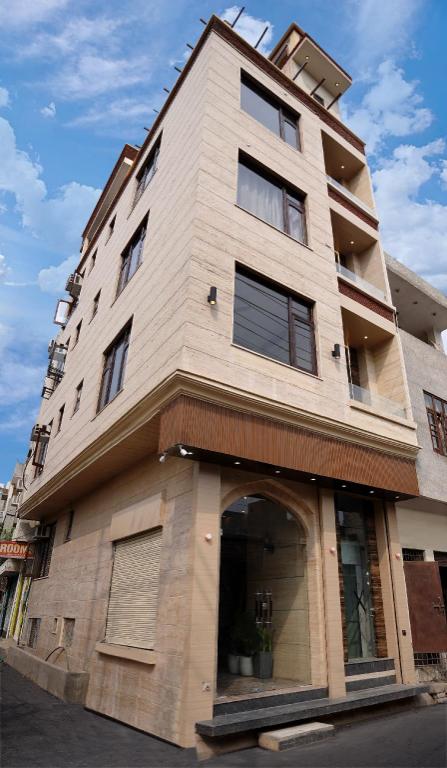

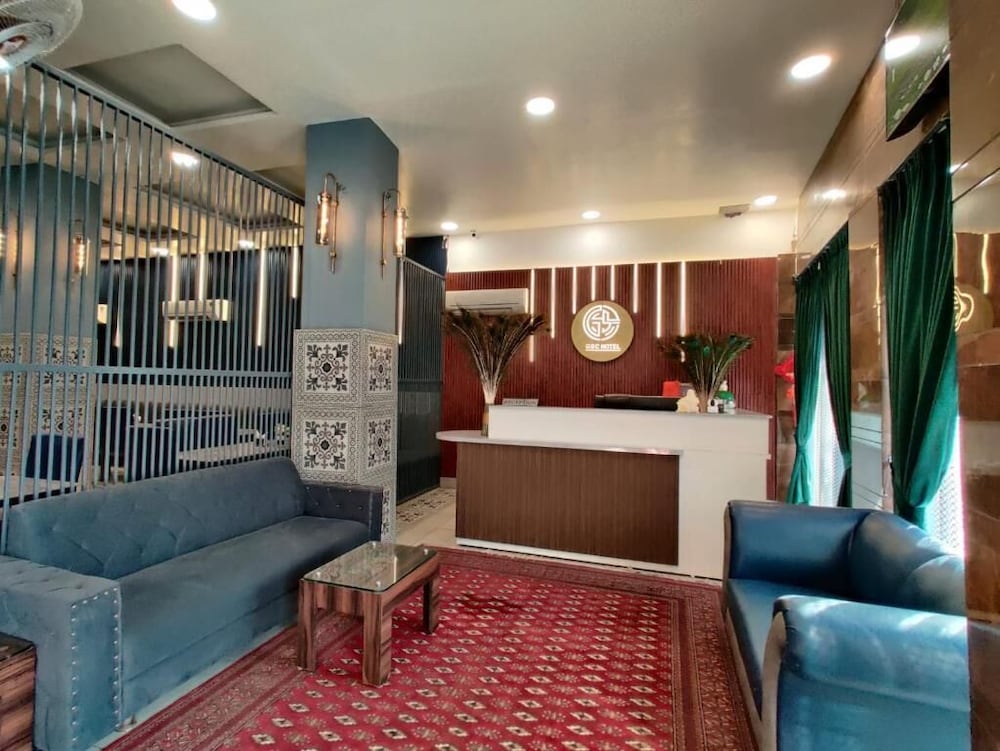
Every hotel we cover in Amritsar
- Hotel Tamanna 50 Meter from Golden Temple 3★ · 4.1/5
- Yuvraj Residency 1 minute walking from Golden Temple 3★ · 0.1 km away
- Hotel Darbar View 2★ · 0.1 km away
- Suman castle Hotel 2★ · 0.1 km away
- Hotel Sakhi Inn By Urban Galaxy 2★ · 3.6/5 · 0.1 km away
- Hotel Alpha Inn 3★ · 0.1 km away
- Golden Pearl Infront Golden Temple Gate 3★ · 0.2 km away
- CSJS Inn Hotel Marketed by Kiwiana 4★ · 3.9/5 · 0.2 km away
- 4N Homestay Golden Temple View 4★ · 0.2 km away
- Hotel Mercury Inn By Sonachi 3★ · 3.8/5 · 0.2 km away
- Hotel CJ International 4★ · 3.7/5 · 0.2 km away
- Hotel Indus by CSJS group 3★ · 0.2 km away
- Hotel Alpha Inn 1★ · 3.4/5 · 0.2 km away
- Hotel Le Golden 3★ · 4.1/5 · 0.2 km away
- Hotel Indus 4★ · 3.5/5 · 0.2 km away
- Hotel Sarovar Regency 3★ · 4/5 · 0.2 km away
- Hotel Sapphire 3★ · 1/5 · 0.2 km away
- Hotel Hari Darshan By Cytech 3★ · 2.2/5 · 0.2 km away
- OYO 18964 Hotel Temple View 2★ · 3.4/5 · 0.2 km away
- Oyo 40297 A K Guest House 2★ · 0.2 km away
- Csjs inn By H S Hotels 3★ · 0.2 km away
- OYO 24073 Hotel Hari Darshan 2★ · 3.4/5 · 0.2 km away
- A J Golden Crescent 2★ · 0.2 km away
- Hotel Golden Heritage 2★ · 3.3/5 · 0.2 km away
More things to do
All things to do


From the journal
All posts Comparisons & rankings
Hotels with pools in Punjab, ranked
Comparisons & rankings
Hotels with pools in Punjab, ranked
A working shortlist of 9 hotels across Amritsar, Chandigarh, Ludhiana and Mohali where the pool is genuinely usable — not a puddle behind the generator shed.
 Comparisons & rankings
Family-friendly hotels in Punjab, ranked
Comparisons & rankings
Family-friendly hotels in Punjab, ranked
Ten hotels across the state where kids under 10 will not lose their minds and parents will not either — with real notes on pools, kids' menus, and connecting rooms.
 Comparisons & rankings
Family hotels in Amritsar: which belt to book by your kids' ages
Comparisons & rankings
Family hotels in Amritsar: which belt to book by your kids' ages
Amritsar’s family rooms cluster in three belts — Ranjit Avenue near the malls, the Golden Temple walk, and the Airport Road pools — and the right one depends on how old your kids are.