Gurdwara Darbar Sahib Tarn Taran
Founded by Guru Arjan Dev around the largest sacred tank in Sikhism.
 Gilded dome of Darbar Sahib Tarn Taran over the largest sarovar in Punjab
What to expect at Gurdwara Darbar Sahib Tarn Taran
Gurdwara Darbar Sahib Tarn Taran was founded by Guru Arjan Dev in 1590, before the Golden Temple was completed, and it sits at the centre of the largest sarovar in the Sikh world — significantly bigger than the Amrit Sarovar at Amritsar. The name Tarn Taran means the boat that carries one across, and the tank was believed to have healing properties for leprosy, so historically it drew the sick and poor from across Punjab. Every Amavas — the moonless night at the end of each lunar month — sees a massive gathering of pilgrims that turns the town into a temporary tent city. Guru Arjan laid out the town at the same time as the tank, and Tarn Taran Sahib is today the headquarters of its own district, split off from Amritsar in 2006, so the lanes around the shrine carry court clerks and district-office traffic as well as pilgrims. Walk in through the main deori rather than the side lanes and the scale registers immediately.
The main shrine, gilded in the same style as the Golden Temple but on a smaller scale, sits on an island reached by a long causeway. The parikrama around the outside of the tank takes half an hour to walk and passes several subsidiary shrines: Baba Deep Singh's memorial, a Nishan Sahib platform, and a shaded ghat where pilgrims still bathe. The langar hall behind the main entrance feeds a steady stream of visitors through the day and expands enormously for Amavas. Most of the gold leaf and a good deal of the marble date from Maharaja Ranjit Singh's patronage in the early nineteenth century, and the sanctum repeats the vocabulary you know from Amritsar — square chamber, pavilion above, cusped arches, floral inlay. Photography is not permitted inside the sanctum, so take your frames from the causeway or from the far corner of the parikrama, where the whole gilded block doubles in the water, and pocket the phone before you cross the threshold.
Tarn Taran is only 24 km south of Amritsar and makes an easy half-day trip, best combined with the Wagah Border ceremony on the way back. Come on Amavas for the spectacle or on any other day for calm. Cover your head, dress modestly and leave shoes at the free stand by the causeway. The town's phulkari and dari-weaving workshops are worth a stop in the market lanes east of the gurdwara. The other sensible pairing runs the opposite way: Goindwal Sahib and its 84-step Baoli Sahib are 22 km east, about 35 minutes by road, and Khadur Sahib sits between the two. Pick one direction — Wagah, or the Goindwal and Khadur loop — because doing both means arriving at the border road late and standing at the back of the retreat crowd. Leave Amritsar by 07:00 for the eastern loop and you are back in the city for a late lunch.
A visit runs in a fixed order and it helps to know it before you arrive. Shoes go to the joda ghar at the head of the causeway, where a volunteer hands you a token; there is no charge and no tip is expected. Past it, a shallow channel of running water washes your feet, and heads must be covered — a cotton rumal costs ₹20 to ₹30 in the bazaar if you have not brought a scarf. Through the deori the causeway runs straight out to the island, a minute's walk, and the queue for the sanctum forms along it; at quiet hours you walk in unimpeded. Inside, ragis sing shabads before the Guru Granth Sahib, people sit a few minutes on the floor at the sides, and the karah prasad counter is just past the exit. Take the prasad in both cupped hands, eat it at the causeway edge, then start the parikrama clockwise rather than doubling back.
Getting here is easiest by bus. Punbus, PRTC and private operators leave Amritsar's main bus stand on GT Road every 10 to 15 minutes for Tarn Taran, Patti, Bhikhiwind and Khem Karan; the run takes 45 to 60 minutes and costs roughly ₹45. You are set down at Tarn Taran bus stand, about 1 km from the shrine — an e-rickshaw is ₹10 to ₹20 shared, ₹40 if you take it alone, or walk it in 12 minutes through the bazaar. By car the same 24 km takes 40 to 60 minutes and there are paid lots off the main bazaar at around ₹20 to ₹30 for a car; on Amavas the approach roads are closed and you park 1 to 1.5 km out. A taxi from Amritsar with two hours' waiting runs ₹1,200 to ₹1,800 return. App cabs will drop you but rarely pick up here, so keep your driver rather than gambling on the return.
Nothing inside costs anything. Entry is free, the shoe stand is free, the langar is free and there is no separate charge for the parikrama, the ghats or any of the subsidiary shrines. What you actually spend on a day trip from Amritsar is the ₹45 bus each way, ₹30 to ₹40 in auto fares, a voluntary ₹10 to ₹50 dropped in the golak or given at the prasad counter, and whatever the bazaar extracts from you afterwards — machine-worked phulkari dupattas start around ₹400 and hand-stitched pieces run into several thousand rupees, while a woven dari is a few hundred upward. Budget ₹200 a head by bus, or about ₹1,500 for four people in a taxi. Nobody at the gate sells tickets; anyone who tells you otherwise is not official. Base yourself in Amritsar — Hotel Ritz Plaza, Golden Sarovar Portico Amritsar or Backpackers Nest for a cheap bed — because Tarn Taran's own lodging is thin and fills on Amavas.
The best hours are between 05:30 and 08:00, when the amrit vela kirtan is still running, the marble is cold underfoot and the causeway is nearly empty. Pilgrim buses land from mid-morning, so 09:00 to 11:00 is the busiest ordinary stretch; 13:00 to 16:00 empties out again on weekdays but is brutal in summer. Sundays and school holidays add a third to the crowd. On Amavas the peak is roughly 20:00 to 01:00 and again before dawn for the bathing. By month, November to March is the season — 8 to 22°C, clear light on the gold — with the caveat that dense fog in late December and January blanks the view before 10:00 and delays trains. May and June hit 42 to 45°C and the marble scalds by 09:00; monsoon leaves the parikrama slick. Aim for a mid-week November morning.
It suits families easily: children are welcome anywhere in the complex, the langar solves lunch, and nobody minds noise. Wheelchair users get a level marble parikrama and a flat causeway once inside, but the bazaar approach is broken and crowded and there are steps at the deori, so arrange to be dropped at the main gate rather than the bus stand. Teenagers will have seen the essentials in 45 minutes unless it is Amavas, when the whole town becomes the attraction. A rainy afternoon is a poor choice — almost all of the circuit is open to the sky. With a one-hour gap before a train it is genuinely doable: the station is 1.5 km away, an auto is ₹30 to ₹40, and sanctum plus half the parikrama fits in 35 minutes. If it is your only day in Amritsar and you have not yet seen the Golden Temple and Jallianwala Bagh, do those first.
Two honest warnings. First, this is not a scaled-down Golden Temple experience with the same infrastructure: there is no museum, no audio guide, no English interpretation and very little signage, so you either arrive knowing the history or you leave without it. The tank is genuinely the largest in Sikhism, but the surrounding parikrama is plainer than Amritsar's and the town presses right up against it, dust, horns and all. Second, Amavas is oversold as an experience for casual visitors — the crowd is enormous, the causeway becomes single-file, dhabas and lodges double their rates and the walk from parking can take 25 minutes. Come the day before for the atmosphere without the crush, as the tips advise. Do not expect to swim; the ghats are for ritual bathing, mostly used by men, and the women's enclosure is small. And do not treat the water's healing reputation as anything but history.
Questions about Gurdwara Darbar Sahib Tarn Taran
Free — no entry fee, no charge for langar or shoe stand. The only money that changes hands is voluntary: ₹10 to ₹50 in the golak or at the karah prasad counter if you wish. Getting here is the real cost — about ₹45 each way on the bus from Amritsar, ₹30 to ₹40 for autos, or ₹1,200 to ₹1,800 for a return taxi with waiting time. Carry small notes; there are no card machines. Nobody official sells tickets at the gate, so treat anyone demanding an entry charge as a tout.
All 24 hours; the gurdwara never closes. The Guru Granth Sahib is installed in the small hours and taken to rest late in the evening, with the exact times shifting by season, and kirtan runs through the amrit vela before dawn. Langar is served round the clock, though the hall is at its fullest between 12:00 and 14:00 and after 19:00. The one practical limit is heat: from May to June the marble is too hot to walk barefoot between about 09:00 and 18:00, so the free hours that matter are early and late.
About two hours including the full parikrama. Break it down as ten minutes for shoes, washing and the deori, twenty to thirty minutes queueing and sitting in the sanctum, thirty minutes for the walk around the sarovar past Baba Deep Singh's memorial and the ghats, and twenty minutes for langar. Add half an hour for the phulkari and dari workshops in the market lanes east of the shrine. On Amavas double all of it — the causeway moves in single file and the walk from parking alone can take 25 minutes.
None — open every day. There is no weekly closure, no ticket window to miss and no seasonal shutdown, which is why an early start is worth more here than any calendar planning. What changes access is weather and crowd: dense fog in late December and January hides the sanctum until mid-morning and delays trains on the branch line, while on Amavas the roads into the town centre are closed to traffic. The sanctum itself is busiest during kirtan, so if you want a quiet darshan aim for the mid-afternoon lull on a weekday.
No booking needed at any time. There is no ticket, no timed entry and no guided tour to reserve, and the langar takes anyone who sits down in the pangat rows. What does need booking is the rest of the day: an Amritsar taxi for a Tarn Taran and Wagah run should be arranged the night before, and hotels in Amritsar such as Taj Swarna Amritsar or Golden Sarovar Portico Amritsar fill for Amavas weekends and gurpurabs. Pilgrim serai rooms near the shrine are first-come and gone by early afternoon on new-moon days.
Tarn Taran railway station is 1.5 km; autos run to the causeway gate. The station sits on the Amritsar to Khem Karan branch line, which carries only a handful of passenger services a day; the ride takes around 45 to 50 minutes and costs under ₹20 unreserved. Because the timetable is sparse, buses are the more reliable option — they leave Amritsar's GT Road bus stand every 10 to 15 minutes and set you down at Tarn Taran bus stand, roughly 1 km or 12 walking minutes from the deori. Use the train only if the timings happen to suit.
Hotels near Gurdwara Darbar Sahib Tarn Taran
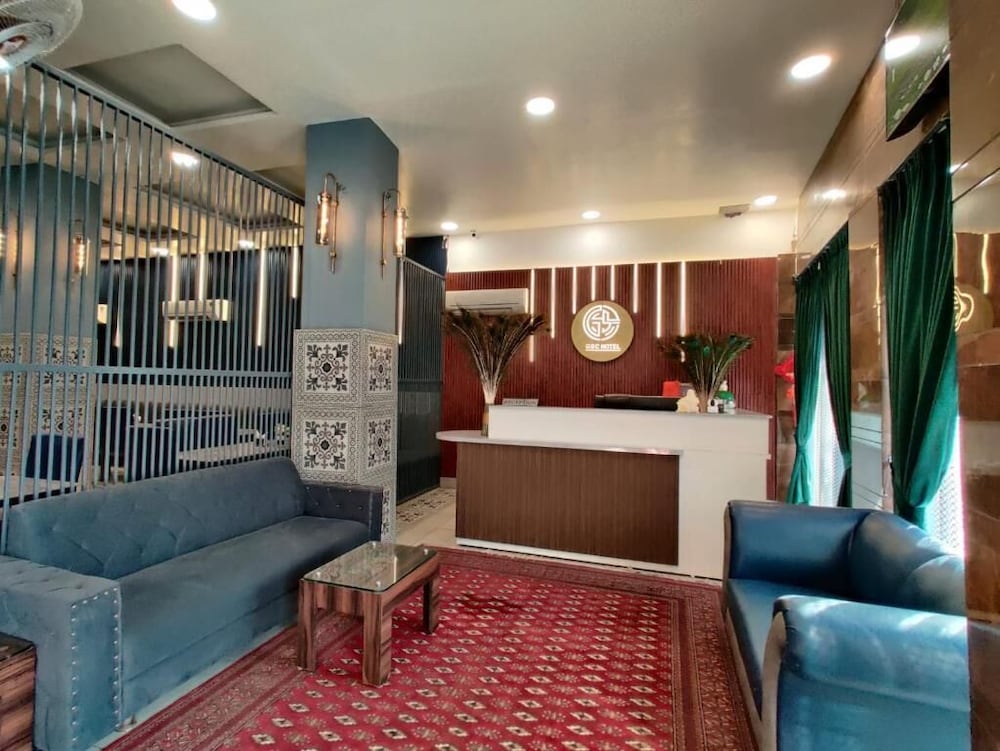
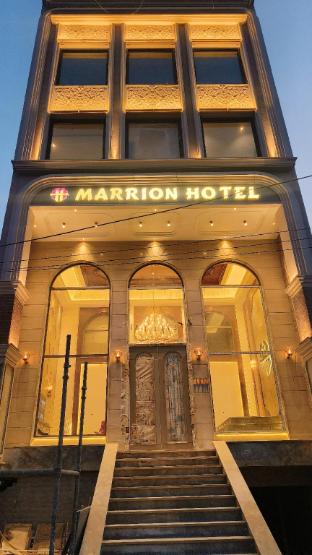
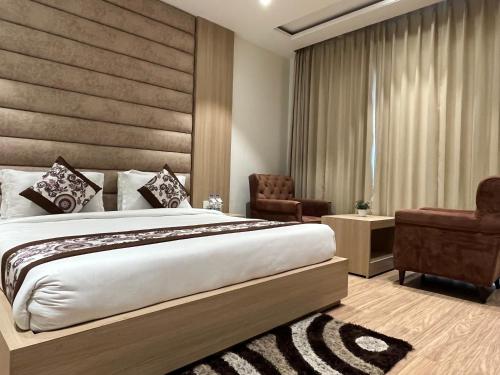
Every hotel we cover in Tarn Taran
- Balaji Kunj 2★ · 3.3 km away
- Hotel Royal Place 3★ · 8.8 km away
More things to do
All things to do


From the journal
All posts Comparisons & rankings
Hotels with pools in Punjab, ranked
Comparisons & rankings
Hotels with pools in Punjab, ranked
A working shortlist of 9 hotels across Amritsar, Chandigarh, Ludhiana and Mohali where the pool is genuinely usable — not a puddle behind the generator shed.
 Comparisons & rankings
Family-friendly hotels in Punjab, ranked
Comparisons & rankings
Family-friendly hotels in Punjab, ranked
Ten hotels across the state where kids under 10 will not lose their minds and parents will not either — with real notes on pools, kids' menus, and connecting rooms.
 Comparisons & rankings
Family hotels in Amritsar: which belt to book by your kids' ages
Comparisons & rankings
Family hotels in Amritsar: which belt to book by your kids' ages
Amritsar’s family rooms cluster in three belts — Ranjit Avenue near the malls, the Golden Temple walk, and the Airport Road pools — and the right one depends on how old your kids are.