Jallianwala Bagh
The walled garden where General Dyer's troops opened fire on unarmed Baisakhi crowds in 1919.
 Martyrs' Well and memorial flame at Jallianwala Bagh
What to expect at Jallianwala Bagh
Jallianwala Bagh is the seven-acre walled garden where, on 13 April 1919, Brigadier-General Reginald Dyer marched fifty rifles into a peaceful Baisakhi gathering and, without warning, ordered them to fire on the unarmed crowd of men, women and children until the ammunition ran out. British official figures gave 379 dead; Indian counts placed the number above a thousand. The massacre broke the moral case for the Raj and radicalised a generation including a young Bhagat Singh who came here as a boy. In 2019 the memorial was extensively renovated for the centenary. The red sandstone pylon in the middle of the lawn is much older: designed by the American architect Benjamin Polk, it was unveiled by President Rajendra Prasad on 13 April 1961, forty-two years to the day. Read the pylon inscription first, before the crowd builds around it, because everything else on the site is a footnote to that date.
The single narrow entrance through which the crowd could not escape is still preserved, and the bullet holes in the perimeter walls have been marked and glassed over so visitors can see them. The Martyrs' Well, into which more than a hundred people jumped to escape the firing, is now enclosed and lit; the eternal flame stands on the memorial platform at the far end. Renovated galleries at the back use projection-mapping to tell the story of the massacre and its aftermath, and a wall carries the names so far recovered. Walk it in sequence and it takes about twenty-five minutes: security check at the gate, the sculpted entrance lane, left along the marked west wall, the well in the south-west corner, the flame, then the galleries. Do the galleries last, when the lawn has told you what they are describing.
This is a place that rewards slow, quiet visiting rather than tourist processing; give it 90 minutes minimum. It sits 150 metres north of the Golden Temple entrance, so almost every visitor comes through, and mid-morning is inevitably busy. Come for the evening light show — usually 19:30 in summer and 18:30 in winter — for a more atmospheric experience. Modest dress is not required but is respectful. Photography is allowed except at the Martyrs' Well platform. Plan the whole block as one outing rather than three errands: temple at dawn, the Bagh at opening, the Partition Museum after breakfast. What you can safely skip is a hired guide at the gate — the panels are captioned in Punjabi, Hindi and English, and the story does not need a commentary track shouted over a crowd.
Getting here is a matter of the last 500 metres, not the first two kilometres. Vehicles cannot enter Heritage Street, the pedestrianised marble spine running from the Town Hall down to the Golden Temple plaza, so every taxi, auto and e-rickshaw stops short. From Amritsar Junction, two kilometres away, an auto-rickshaw runs about ₹80 to ₹120 and an e-rickshaw ₹30 to ₹50 a seat; the walk down Queens Road, Court Road and Hall Bazaar takes 25 to 30 minutes through good bazaar chaos. From the inter-state bus stand on Grand Trunk Road, budget a similar fare. Sri Guru Ram Dass Jee International Airport is 13 kilometres north-west, roughly ₹600 to ₹800 and 35 minutes by prepaid taxi. Do not try to park at the gate. Get dropped at the Town Hall, walk the eight minutes down Heritage Street, and the memorial gate is on your left before the temple clock tower.
Money barely enters into it, which is unusual for a site of this importance. Entry is ₹0 at all hours, there is no ticket counter, no camera fee, no separate charge for the renovated galleries and none for the evening light show. Guides loitering near the gate open at around ₹300 to ₹500 for a walk-round; the wall panels do the same job for nothing. What you will actually spend on this half-day is transport and food: ₹30 to ₹50 an e-rickshaw hop, ₹20 for water, and whatever lunch costs at the dhabas around Town Hall, where a kulcha plate or a dal-and-lachha-paratha meal sits comfortably under ₹300 a head. The langar at the Golden Temple is free to anyone who sits down. Two people can do the entire morning, transport included, for under ₹500 — save the budget for the paid museum next door.
Hour by hour, the first sixty minutes after opening are the whole argument: 06:30 in summer, 07:00 in winter, low light on the brick, and space to stand at the well without anyone behind you. Coach groups arrive from about 10:00, having done the temple at dawn, and 11:00 to 16:00 is a shuffling queue past the west wall. It thins again after 17:00 and the evening show draws a calmer, more local crowd. Month by month, October to March is the season — clear, 15-25C, though December and January mornings start at 4-8C with river fog and November brings smog. April to June is brutal on a shadeless lawn at 40-45C, so come at opening or after 17:00. On 13 April, the anniversary, wreath ceremonies and dignitaries restrict movement all morning; come for the atmosphere or stay away entirely.
It suits anyone who read about 1919 and wants the geometry of it — the height of the walls, the width of the lane, the distance from the firing line to the well, which is the thing no book conveys. Teenagers who have done the period at school get more from it than younger children; the gallery projections carry gunfire audio and unsparing detail, and under-eights tend to find the whole thing either frightening or boring. Wheelchair users manage the lawn and main paths, which are level and paved, with ramps added in the refurbishment, though the well enclosure and parts of the gallery route are tighter. There is no cafe and no left-luggage counter on site. If you have a one-hour gap before a train, it still works: 25 minutes inside, 20 minutes back to Amritsar Junction, done.
Fold it into the same half-day with what is within walking distance. The Golden Temple is 150 metres and three minutes south — free, heads covered, free shoe deposit, langar served round the clock. The Partition Museum occupies the restored Town Hall 350 metres north, six minutes up Heritage Street, and is the one paid stop on this block; allow 90 minutes and check the day, as it is usually shut on Mondays. For food, Bharawan da Dhaba is five minutes away by the Town Hall, Kesar da Dhaba is about ten minutes deeper into the Chowk Passian lanes for dal makhani and lachha paratha, and Gurdas Ram Jalebi Wala is a two-minute detour off Heritage Street. Gobindgarh Fort is 2.5 kilometres west, a ₹40 e-rickshaw ride. If you want the Attari-Wagah ceremony, 28 kilometres out, leave by 15:00.
The honest caveats. The 2019-21 makeover is divisive: historians including Kim Wagner objected publicly to the sculpted figures now lining the once-plain entrance lane, the lotus pond and the coloured lighting, arguing that a site whose power was its bare brick has been styled into a visitor attraction. You may agree once you see it. The bullet marks, circled in white and set behind glass, can read as curated rather than raw. The Martyrs' Well is sealed under a grille, so there is genuinely little to look at. The light show is narrated in Hindi and Punjabi, not English, so foreign visitors get atmosphere rather than detail. And the place is small — seven acres, twenty minutes at a walking pace — which regularly disappoints people expecting a full museum. For depth rather than mood, the Partition Museum next door is where the afternoon should go.
Questions about Jallianwala Bagh
Free. There is no admission charge including the light show. There is no ticket counter at all — you walk through a security check and you are in. The renovated galleries, the projection presentations, the memorial platform and photography anywhere except the Martyrs' Well platform are all included at ₹0. Guides at the gate quote around ₹300 to ₹500 and are not needed, since panels are captioned in Punjabi, Hindi and English. Budget only for transport, roughly ₹30 to ₹50 by e-rickshaw from Town Hall or the temple plaza.
All open hours; the memorial is always free. That means 06:30 to 19:30 from April to October and 07:00 to 18:00 from November to March, with the sound and light show most evenings at roughly 19:30 in summer and 18:30 in winter, also free. There is no paid window, no premium slot and no separate gallery ticket. Staff begin clearing the lawn about twenty minutes before closing, so arrive with at least half an hour in hand if you want the galleries as well as the well and the wall.
One to two hours with the galleries. Roughly twenty-five minutes covers the entrance lane, the marked west wall, the Martyrs' Well and the eternal flame at a respectful pace; the galleries behind the flame add another thirty to forty minutes if you read the panels rather than skim them. The evening light show runs somewhere around thirty to forty-five minutes on top. The absolute minimum that still means something, if you are squeezing it in before a train, is about twenty-five minutes inside the walls.
Open every day of the year. There is no weekly closing day and no seasonal shutdown, only the shorter winter hours from November to March. Two dates behave differently: on 13 April, the massacre anniversary, wreath-laying ceremonies and official visitors restrict movement across the lawn through the morning, and Independence Day and Republic Day draw heavy local crowds. Individual galleries occasionally close for maintenance without notice, and the evening light show is dropped in heavy rain, so treat it as a bonus rather than a fixture.
Not required for entry or the light show. Nothing here is sold online, there is no timed-entry system and no queue-jump ticket exists to be sold to you. Seating for the evening show is first-come on the ground and steps near the flame, so arrive fifteen to twenty minutes early if you want a clear sightline; latecomers stand at the back. Old-city walking tours that include the Bagh can be booked through hotels for a few hundred ₹ upwards, but they add nothing you cannot read on the wall panels yourself.
Amritsar Junction 2 km; walk 150 m from Golden Temple. From the station an auto-rickshaw costs about ₹80 to ₹120 and a shared e-rickshaw ₹30 to ₹50 a seat; walking via Queens Road, Court Road and Hall Bazaar takes 25 to 30 minutes. The inter-state bus stand on Grand Trunk Road is a similar distance, and the airport is 13 km out at roughly ₹600 to ₹800 by taxi. No vehicle reaches the gate — Heritage Street is pedestrianised, so get dropped at the Town Hall and walk eight minutes.
Hotels near Jallianwala Bagh

Every hotel we cover in Amritsar
- OYO 29337 Hotel Great Stay 3★
- Hotel Jeewan Castle 2★ · 2.7/5
- OYO 14466 Asha Bed & Breakfast 2★ · 0.1 km away
- Hotel Royal Inn 2★ · 0.1 km away
- Hotel Global Inn 3★ · 4.5/5 · 0.1 km away
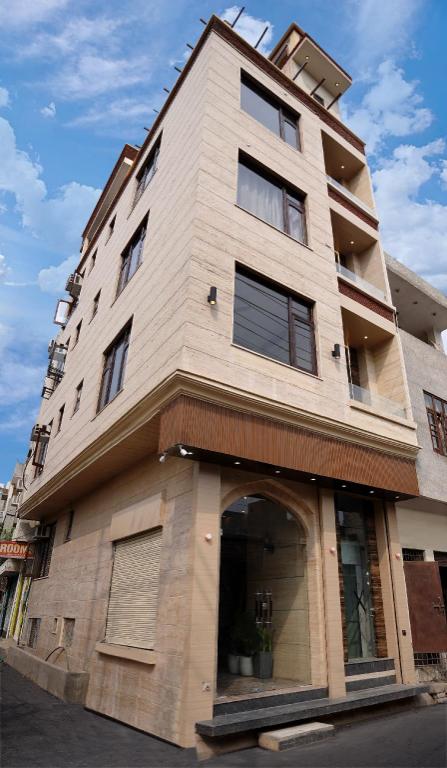
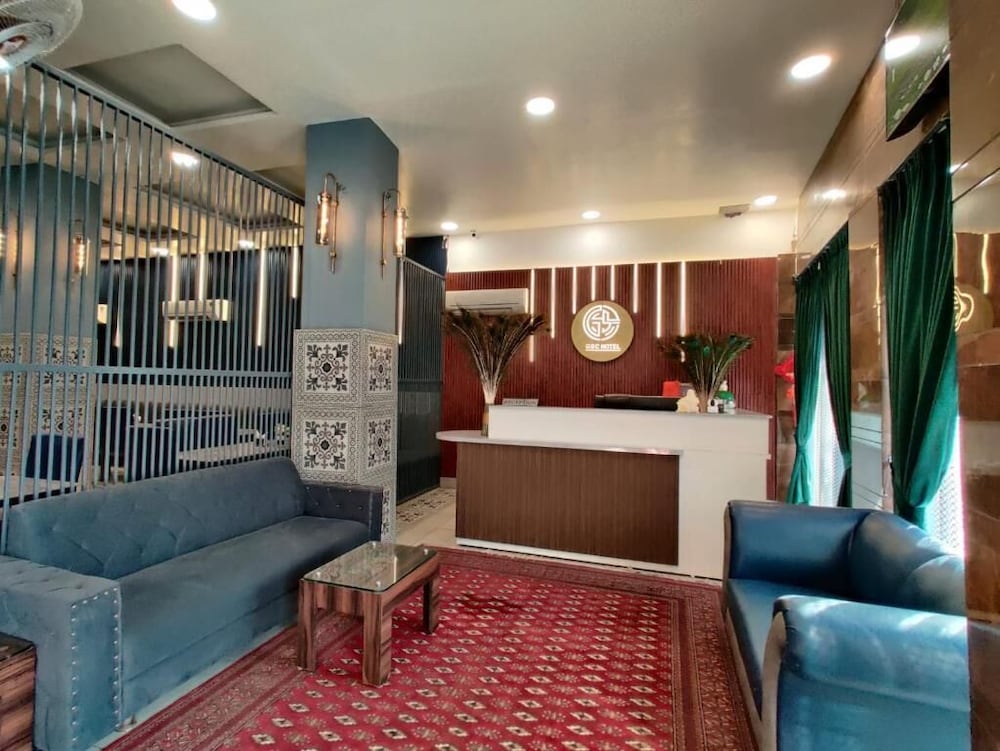
- Hotel Gc Grand Inn 3★ · 0.1 km away
- Hotel Krishnas By Urban Galaxy 3★ · 3.9/5 · 0.1 km away
- Hotel Smile Residency 3★ · 0.1 km away
- Stamps Golden Lagoon by Eight Continents Opposite to Golden Temple 3★ · 0.1 km away
- OYO 30100 Lucky Guest House 2★ · 0.1 km away
- Hotel Moon Inn Just 2 Min Walk From Golden Temple & Jallianwala Bagh 3★ · 0.1 km away
- OYO 24333 Hotel Sartaj Inn 2★ · 0.1 km away
- Treebo Trip Smile Inn 3★ · 0.1 km away
- Osahan Paradise Homestay Near Golden Temple And Park View 0.1 km away
- OYO 37723 Pam And Chand Guest House 2★ · 0.1 km away
- Hotel Robin 3★ · 0.1 km away
- Malhotra Guest House 3★ · 0.1 km away
- Sharma Guest House 2★ · 0.1 km away
- Hotel Kanda Continental 3★ · 0.1 km away
- Om Sai B&B 4★ · 0.1 km away
- Abode By Aliste Hotels Amritsar 2★ · 4.1/5 · 0.1 km away
- Goroomgo Global Inn Amritsar 2★ · 0.1 km away
- Hotel Heritage Homes 2★ · 0.1 km away
- Hotel A Star 50 Meter from Golden temple 3★ · 0.1 km away
More things to do
All things to do


From the journal
All posts Comparisons & rankings
Hotels with pools in Punjab, ranked
Comparisons & rankings
Hotels with pools in Punjab, ranked
A working shortlist of 9 hotels across Amritsar, Chandigarh, Ludhiana and Mohali where the pool is genuinely usable — not a puddle behind the generator shed.
 Comparisons & rankings
Family-friendly hotels in Punjab, ranked
Comparisons & rankings
Family-friendly hotels in Punjab, ranked
Ten hotels across the state where kids under 10 will not lose their minds and parents will not either — with real notes on pools, kids' menus, and connecting rooms.
 Comparisons & rankings
Family hotels in Amritsar: which belt to book by your kids' ages
Comparisons & rankings
Family hotels in Amritsar: which belt to book by your kids' ages
Amritsar’s family rooms cluster in three belts — Ranjit Avenue near the malls, the Golden Temple walk, and the Airport Road pools — and the right one depends on how old your kids are.