Partition Museum
The world's first museum dedicated to the human story of the 1947 partition.
 Red-brick Town Hall housing the Partition Museum
What to expect at Partition Museum
The Partition Museum opened in 2017 inside Amritsar's restored red-brick Town Hall and remains the world's first — and still only — museum devoted entirely to the human story of the 1947 partition, in which up to two million people died and fourteen million were displaced in what is still the largest forced migration in history. The museum's approach is oral rather than political: it collects survivor testimonies, personal objects, letters, and photographs, and the effect of walking through fourteen galleries of individual voices is much more affecting than any grand-narrative history museum.
Galleries cover the pre-partition Punjab, the political run-up through 1946, the announcement of the Radcliffe Line, the massacres, the migrations by train and on foot, the refugee camps at Kurukshetra and Kingsway, and the resettlement decades. A Tree of Hope courtyard invites visitors to tie a green leaf-tag with their own family's partition story — thousands are now attached. The museum shop stocks the best selection of partition literature and oral histories anywhere in India.
Plan two to three hours, longer if you watch the survivor videos in full. It is right on Heritage Street, so pair with Jallianwala Bagh and the Golden Temple in a single half-day. On Partition Horrors Remembrance Day (14 August) admission is free and there are extended hours with evening events. The café inside the courtyard is excellent for a break. Photography is allowed in most galleries but not on the ground-floor survivor-testimony floor.
The building itself is part of the visit. The Town Hall dates from the 1860s, was reworked during the Heritage Street project that pedestrianised the corridor down to the Golden Temple, and its two floors of thick-walled rooms wrap a small open courtyard, which is where the Tree of Hope stands. That layout dictates the route: you buy a ticket in the entrance hall, drop straight into the ground-floor testimony wing, then work clockwise upstairs through the chronological galleries and come back down into the courtyard at the end. It is a deliberately quiet building — no soundtrack piped through the rooms, no dramatic lighting, low ceilings and dim galleries so that the projected faces and the handwritten letters carry the weight. Treat it as a reading museum rather than a looking one, and do not attempt it in the twenty minutes before closing.
Getting here is simple as long as you understand that Heritage Street is closed to cars. Ask any driver for Town Hall chowk, not for the museum, and you will be dropped at the pedestrian mouth of the street, thirty seconds from the ticket desk. From Amritsar Junction railway station, 2 km away, an e-rickshaw is roughly ₹40-60 and an auto ₹100-150 after the usual haggle; the walk down Queen's Road and through Hall Bazaar takes 25-30 minutes and is interesting rather than pleasant. Sri Guru Ram Dass Jee International Airport at Raja Sansi is 11-13 km out, around ₹600-800 and 30-40 minutes by taxi. There is no metro in Amritsar. Drivers should use the multi-level parking on the Golden Temple side rather than circling the old city lanes, then walk the last five to seven minutes in.
Costs are the least of your worries. Entry is ₹20 for Indian nationals and ₹250 for foreign visitors, paid at the desk on the way in, and that single ticket covers all fourteen galleries, both floors, the testimony room and the courtyard — nothing inside is gated behind a second charge. There is no combined ticket, and none is needed, because the two neighbouring sights you will pair it with, Jallianwala Bagh and the Golden Temple, are both free. Where money actually goes is the shop: partition memoirs, oral-history collections and reprints run roughly ₹200-1,500 and the selection genuinely beats the bookshops of Hall Bazaar. Courtyard café snacks and tea sit around ₹100-300. A full half-day here — ticket, rickshaws, a dhaba lunch — lands under ₹500 a head.
Time it for the first ninety minutes after opening. The doors go at 10:00, and until about 11:30 on a weekday the testimony room is empty enough to sit through three or four full interviews without someone standing over your shoulder. School and college groups arrive mid-morning and fill the upstairs galleries in waves; weekends and pilgrim peaks push the same crowds later into the afternoon. Last entry is 17:30, but anything after 16:00 turns the visit into a skim — be inside by 15:00 at the latest. Mondays it is shut, so shift Gobindgarh Fort or Jallianwala Bagh into that slot. October to March is the comfortable season; in the 40-45°C furnace of May and June the thick-walled galleries are a genuine midday refuge, and on 14 August, free and packed, arrive at opening.
It suits readers, teenagers from about fourteen up, and anyone with family roots in undivided Punjab — for whom the Tree of Hope courtyard is often the point at which the visit stops being a museum. It does not suit small children: the accounts of massacre, of abducted women, of trains arriving with no one alive on board are unflinching, and there is nothing interactive to hold a seven-year-old. A one-hour gap before a train works if you accept the compromise — testimony room, one upstairs gallery, the courtyard — and at ₹20 nobody is out of pocket. It is the best rainy-afternoon or heat-of-the-day option in the old city. The building is a restored nineteenth-century town hall with the main galleries upstairs, so wheelchair users and anyone with bad knees should ask at the ticket desk about step-free routes before paying.
Fold it into one clockwise half-day. Jallianwala Bagh is five minutes' walk down Heritage Street and free; the Golden Temple is another three minutes beyond it, free, with free langar and a mandatory head covering. Hall Bazaar for phulkari and cloth is three minutes north of the Town Hall, Bharawan Da Dhaba is more or less opposite, and Kesar Da Dhaba is about ten minutes through the lanes at Chowk Passian for a thali in the ₹150-300 range; Ahuja Milk Bhandar and Gurdas Ram Jalebi Wala are the classic sweet stops on the same walk. Gobindgarh Fort is 2 km out, ₹60-80 by e-rickshaw. If Wagah is on the list, that is 28 km and ₹1,200-1,800 for a return taxi, so leave the old city by 15:00.
Two honest warnings. First, this is a text-heavy museum in dim rooms — panels, letters and transcripts do most of the work, the artefact collection is modest, and visitors expecting the scale of a national institution will find two floors of a small town hall instead. Second, it deliberately refuses to assign blame or explain the geopolitics in any depth; people who come wanting maps, cabinet minutes and a verdict on Mountbatten and Radcliffe leave frustrated, because the entire curatorial choice is to stay at the level of the individual. Ignore the touts on Heritage Street selling ₹500 guided packages — the signage and the testimony do not need an intermediary. Do respect the camera ban on the testimony floor, which is enforced, and do budget the twenty minutes in the shop that most people wish they had taken.
Questions about Partition Museum
₹20 for Indian nationals, ₹250 for foreign visitors. Tickets are sold at the desk in the entrance hall and cover all fourteen galleries, both floors, the survivor-testimony room and the Tree of Hope courtyard — there is no second charge once you are inside and no separate permit for photography in the galleries where cameras are allowed. Extras are voluntary: books in the shop run about ₹200-1,500 and courtyard café tea and snacks ₹100-300. If you plan to break for lunch, ask at the desk before walking out.
Free for everyone on 14 August, Partition Horrors Remembrance Day. Hours are extended that day and there is evening programming, which also makes it the single busiest date of the museum's year — arrive at 10:00 if you want to sit through testimonies without a crowd behind you, or come after 18:00 for the commemorative events rather than the galleries. There are no other free days in the calendar, and the museum is closed on Mondays regardless. The rest of the year ₹20 is hardly a barrier.
Two to three hours, more if you watch full testimonies. Budget roughly 30-45 minutes in the ground-floor testimony room, about ninety minutes for the chronological galleries upstairs, fifteen in the Tree of Hope courtyard and twenty in the shop, which is better than it sounds. A hard rush — testimony room, one gallery, courtyard — can be done in seventy-five minutes if you have a train. Last entry is 17:30, so be through the door by 15:00 to avoid being moved along.
Closed every Monday. The rest of the week it runs Tuesday to Sunday, 10:00 to 18:00, with last entry at 17:30 and staff beginning to clear the upper galleries a few minutes before six. If Monday is your only day in the old city, the obvious substitutes are all within walking distance or a short rickshaw ride: Jallianwala Bagh and the Golden Temple, both free and both open daily, or Gobindgarh Fort 2 km away. Check ahead around major public holidays.
No advance booking required; tickets sold at the door. There are no timed slots and no online queue to join, and even on a busy weekend the wait at the desk is a couple of minutes — the crowds in this part of Amritsar are all at the Golden Temple, not here. The exceptions are school parties and groups of more than ten, who should contact the museum in advance so a route can be staggered, and 14 August, when free entry brings the year's heaviest footfall.
Amritsar Junction 2 km; the museum is on Heritage Street, walking distance from the Golden Temple. From the station an e-rickshaw is about ₹40-60 and an auto ₹100-150; walking takes 25-30 minutes via Queen's Road and Hall Bazaar. The airport at Raja Sansi is 11-13 km, roughly ₹600-800 and 30-40 minutes by taxi. Amritsar has no metro. Heritage Street is pedestrianised, so ask your driver for Town Hall chowk — the Golden Temple itself is a 300 m stroll on from the museum door.
Hotels near Partition Museum

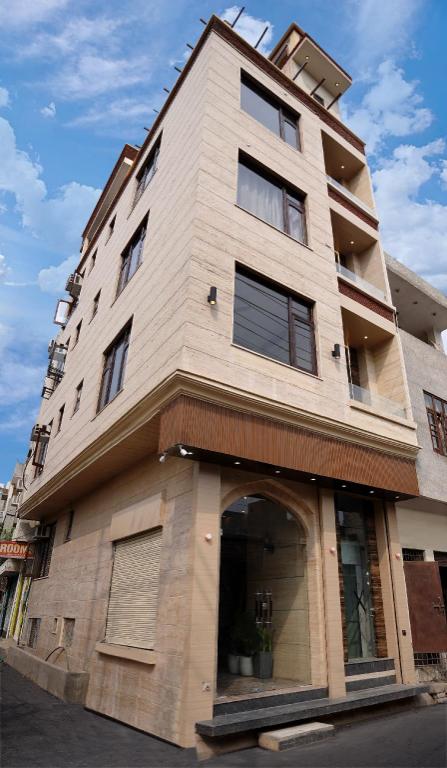
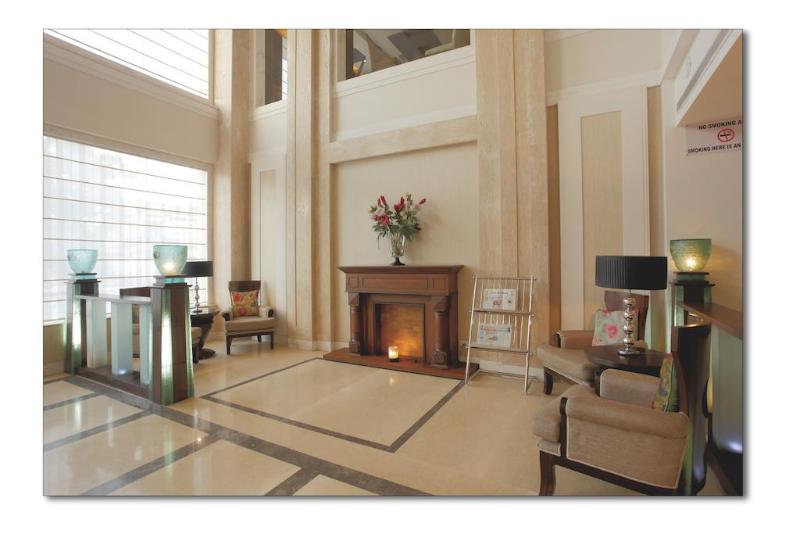
Every hotel we cover in Amritsar
- Hotel MG Residency 2★ · 3.3/5 · 0.1 km away
- Madan Residency 2★ · 4.7/5 · 0.1 km away
- Hotel Golden Stay 3★ · 0.2 km away
- Swaran hotel 3★ · 0.2 km away
- Oyo 11421 Regal Residency 2★ · 3.4/5 · 0.2 km away
- FabHotel DM Residency 2★ · 0.2 km away
- Oyo 43606 Darshan Guest House 3★ · 0.2 km away
- Hotel Sign Inn 3★ · 0.2 km away
- Regal 4★ · 3.7/5 · 0.2 km away
- Fabexpress 56 Amritsar 3★ · 4.3/5 · 0.2 km away
- Hotel 56 2★ · 3.8/5 · 0.2 km away
- Ginni Executive 2★ · 4.8/5 · 0.2 km away
- The Heritage Inn 3★ · 0.3 km away
- Hotel Indus Divine Golden View Amritsar 3★ · 0.3 km away
- Bharawan Clarks Inn Express 3★ · 3.8/5 · 0.3 km away
- Fabhotel Dm Residency 3★ · 0.3 km away
- OYO 24073 Hotel Hari Darshan 2★ · 3.4/5 · 0.3 km away
- A K Continental 2★ · 0.3 km away
- Hotel City Inn 3★ · 0.3 km away
- Hotel Le Golden 3★ · 4.1/5 · 0.3 km away
- Hotel Sarovar Regency 3★ · 4/5 · 0.3 km away
- Hotel Sapphire 3★ · 1/5 · 0.3 km away
- One Earth City Pearl Amritsar 3★ · 0.3 km away
- OYO 14926 AK residency 2★ · 4.2/5 · 0.3 km away
More things to do
All things to do


From the journal
All posts Comparisons & rankings
Hotels with pools in Punjab, ranked
Comparisons & rankings
Hotels with pools in Punjab, ranked
A working shortlist of 9 hotels across Amritsar, Chandigarh, Ludhiana and Mohali where the pool is genuinely usable — not a puddle behind the generator shed.
 Comparisons & rankings
Family-friendly hotels in Punjab, ranked
Comparisons & rankings
Family-friendly hotels in Punjab, ranked
Ten hotels across the state where kids under 10 will not lose their minds and parents will not either — with real notes on pools, kids' menus, and connecting rooms.
 Comparisons & rankings
Family hotels in Amritsar: which belt to book by your kids' ages
Comparisons & rankings
Family hotels in Amritsar: which belt to book by your kids' ages
Amritsar’s family rooms cluster in three belts — Ranjit Avenue near the malls, the Golden Temple walk, and the Airport Road pools — and the right one depends on how old your kids are.