Virasat-e-Khalsa
Moshe Safdie's shining museum of Sikh history, the most visited in India.
 Curved steel petals of Virasat-e-Khalsa museum by Moshe Safdie
What to expect at Virasat-e-Khalsa
Virasat-e-Khalsa is the museum of Sikh heritage designed by the Israeli-Canadian architect Moshe Safdie and opened in Anandpur Sahib in 2011. The building itself is astonishing — two clusters of curved concrete and stainless-steel petals rising from a sandstone plinth against the Shivalik hills, connected by a 165-metre bridge over a natural ravine. It is regularly counted as one of the most visited museums in India, with over 8,000 visitors on peak days, and the exhibitions inside cover 500 years of Sikh history from Guru Nanak's birth to the present day.
The visit starts with a short film in the auditorium then leads you across the ravine bridge into the eastern galleries, which cover the ten Gurus in chronological order, each in its own dome-topped room with murals, illuminated manuscripts and immersive audio. The western complex covers the post-Guru period — Banda Bahadur, the misls, Ranjit Singh's empire, the two Anglo-Sikh wars, partition, and the modern diaspora. Every gallery is trilingual (Punjabi, Hindi, English) and headphones are provided free.
Plan a full three hours minimum; four is more realistic if you read the panels. Come Tuesday-Thursday to avoid weekend crowds — Sunday afternoons see hour-long queues just for the auditorium. Photography is not allowed in the galleries. Combine with Takht Sri Kesgarh Sahib which is a 15-minute uphill walk on the far side of the ravine; the two are conceived as a pair. Free parking is available and the on-site cafeteria is modest but adequate.
Anandpur Sahib sits in Rupnagar district, 80 km north of Chandigarh on NH-205 through Kharar, Kurali and Ropar, a drive of about two hours. Ludhiana is roughly 120 km away, Jalandhar about 140 km via Nawanshahr and Balachaur, and Amritsar around 230 km, a five-hour haul better broken with an overnight stay. Trains stop at Anandpur Sahib station on the Nangal-Una line, including the New Delhi-Amb Andaura Vande Bharat, which reaches town late morning and starts back early in the afternoon: barely three hours on the ground, too tight for this museum. PUNBUS and PRTC coaches leave Chandigarh ISBT-43 through the day for roughly ₹130-170 in an ordinary bus, dropping at Anandpur Sahib bus stand 1.5 km from the gate. From station or bus stand, e-rickshaws charge ₹30-50 and autos ₹80-100. Drive, or take a morning train and stay the night — do not build the day around the last evening bus back to Chandigarh.
Nothing inside is ticketed. Entry is free for Indian and foreign visitors alike, there is no camera ticket, no charge for the auditorium film and no deposit on the headphone audio-guide, and the car park takes no money either — unusual enough that people spend the first five minutes hunting for a counter that does not exist. What you actually spend goes on travel, food and the shop, where paperback histories and mural reprints start around ₹100 and illustrated hardbacks run past ₹1,000. The cafeteria does tea, cold drinks and fried snacks for pocket change; a proper sit-down meal for two in Anandpur Sahib town runs ₹300-400, and langar at Takht Sri Kesgarh Sahib costs nothing at all. Anyone loitering near the gate offering a paid guided tour is freelance and unnecessary — the free trilingual audio covers exactly the same ground. Budget ₹300-400 a head by bus from Chandigarh, or ₹3,000-4,000 for a return taxi split four ways.
Doors open at 10:00 and the first 45 minutes are the calmest of the day, which matters because the route is one-way and a slow start ruins the rest. School parties land between 11:00 and 13:00 on term-time weekdays and fill the dome rooms with noise; things ease after 15:00, but with last entry at 16:30 and closing at 17:30 you will be jogging through the western complex. October to March is the season — clear air, the Shivaliks visible from the bridge, daytime temperatures of 8-22°C, though December and January fog delays trains from Chandigarh and Delhi. May and June push past 42°C and the galleries are cooled while the ramps, plinth and bridge are not, so arrive at opening or not at all. Monsoon from July to September greens the ravine beautifully between storms. Hola Mohalla, the day after Holi in March, brings lakhs to Anandpur Sahib: come for the festival or come for the museum, never both.
Access is better than most Indian museums of this scale: the whole route works on long gentle ramps and lifts rather than steps, the bridge included, and staff will point wheelchair users to the shorter service routes. The catch is distance — the full circuit is close to two kilometres, so a wheelchair user needs someone to push. Children under about eight respond to the murals, models and soundscapes and ignore every panel, which is fine; the open plazas outside give them somewhere to burn off the rest. Teenagers do well with the headphones. On a wet afternoon the galleries stay dry but the bridge and plazas do not, so carry an umbrella for the crossing. If you have only an hour before a train, skip the interior entirely: walk the plinth and the reflecting pools from the outside, which takes twenty minutes and is where the photographs are anyway.
Takht Sri Kesgarh Sahib, 15 minutes uphill, is the reason Anandpur Sahib exists — one of the five Takhts, the place where Guru Gobind Singh founded the Khalsa in 1699, with the historic weapons displayed inside and langar served all day at no charge. Gurdwara Sis Ganj Sahib and Gurdwara Guru Ka Mahal are in the old town, 2 km from the museum, and the ruined fort of Qila Anandgarh is a 20-minute walk from there. Further out, Naina Devi temple is 25 km away across the border in Himachal Pradesh, Bhakra Dam is 35 km north near Nangal but needs prior BBMB permission for anything closer than the road view, and Rupnagar, 40 km back towards Chandigarh, has the archaeological museum for the Harappan site. Rooms in town are simple serais and small hotels; for comfort, base yourself around Chandigarh and Zirakpur, or at The Oberoi Sukhvilas Spa Resort New Chandigarh, about 65 km down NH-205.
The honest caveat is that this is a narrative museum, not a collection. There are almost no original artefacts: what you get is mural, model, replica, projection and soundtrack, brilliantly staged but second-hand. Visitors expecting relics of the Gurus should walk up to Kesgarh Sahib, where they actually are. The camera ban in the galleries irritates people who came for the architecture, though nothing stops you photographing the exterior for as long as you like. The much-quoted visitor numbers measure footfall, not quality, and on a peak Sunday the crowd moves you through at pilgrimage pace with no chance to double back on a one-way route. Plenty of groups turn round at the bridge and skip the western complex, which covers Ranjit Singh, the Anglo-Sikh wars and partition and is the stronger half — do not be one of them. And every week someone steps off the train on a Monday to a closed gate.
Questions about Virasat-e-Khalsa
Free. There is no admission charge. There is no two-tier pricing for foreign visitors, no camera ticket, no separate fee for the auditorium film and no deposit taken on the headphone audio-guide, and the car park is free as well. The only money you will spend on site is at the cafeteria or the museum shop, where books start around ₹100 and illustrated hardbacks pass ₹1,000. Ignore anyone near the gate selling a paid guided tour; they are not museum staff and the free audio says the same things.
All open hours; the museum is always free. That means 10:00 to 17:30 Tuesday to Sunday with no discounted slot, no paid evening opening and no charged special exhibitions to catch you out. Because entry costs nothing, arrival time is about crowds rather than money: the 10:00 opening and the window after 15:00 are the thinnest, while 11:00 to 13:00 on term-time weekdays belongs to school parties and Sunday afternoon is the worst hour of the week to be queuing for the introductory film.
Three to four hours to see it properly. Budget 20 minutes for security, the cloakroom and the auditorium film, about 90 minutes for the eastern galleries covering the ten Gurus, ten minutes to cross the 165-metre bridge, and at least an hour for the western complex on Banda Bahadur, the misls, Ranjit Singh and partition. The route is one-way, so rushing the first half to save time simply means you cannot go back. Add a further hour if you are walking up to Takht Sri Kesgarh Sahib afterwards.
Mondays. Also closed on some national holidays; check ahead. The Monday closure catches out day-trippers arriving on the morning train from Chandigarh or Delhi, and there is nothing to do at the gate but photograph the exterior, which is at least free and takes twenty minutes. If your only free day is a Monday, redirect to Takht Sri Kesgarh Sahib fifteen minutes uphill and the town gurdwaras, which are open daily from early morning. Around Hola Mohalla in March the schedule can shift with the festival programme.
No advance booking; just arrive during opening hours. There is no online ticket, no timed-entry slot and no group reservation system for individuals, though large school and pilgrim coaches do notify the museum in advance, which is why weekday late mornings feel busier than the numbers suggest. Bags go through a security check and large luggage into the free cloakroom, so travelling light shortens your wait. The only thing worth planning ahead is your return transport from Anandpur Sahib, particularly the last bus to Chandigarh.
Anandpur Sahib railway station, 2 km; autos and e-rickshaws run to the museum. Expect ₹30-50 by e-rickshaw and ₹80-100 by auto, or a flat 25-minute walk. The station sits on the Nangal-Una line and is served by the New Delhi-Amb Andaura Vande Bharat plus slower Ambala and Nangal Dam services. By road, PUNBUS and PRTC coaches from Chandigarh ISBT-43 cost roughly ₹130-170 and stop at the town bus stand, 1.5 km from the gate. Parking at the museum is free for cars and coaches.
Hotels near Virasat-e-Khalsa
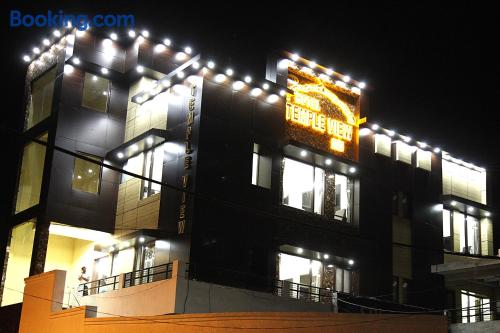
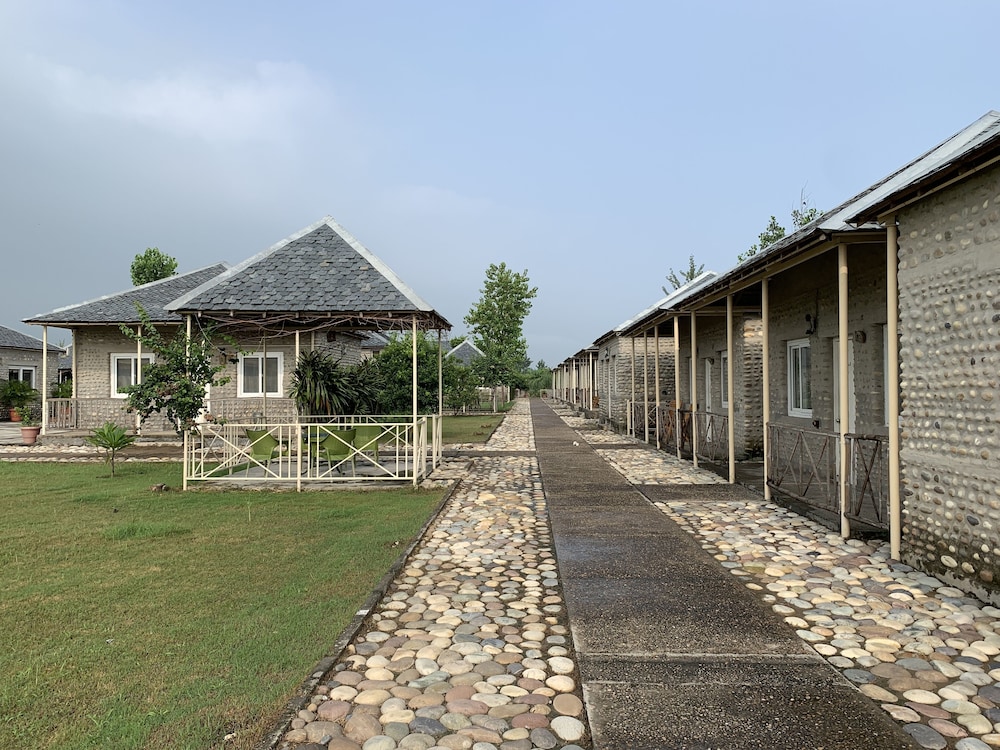
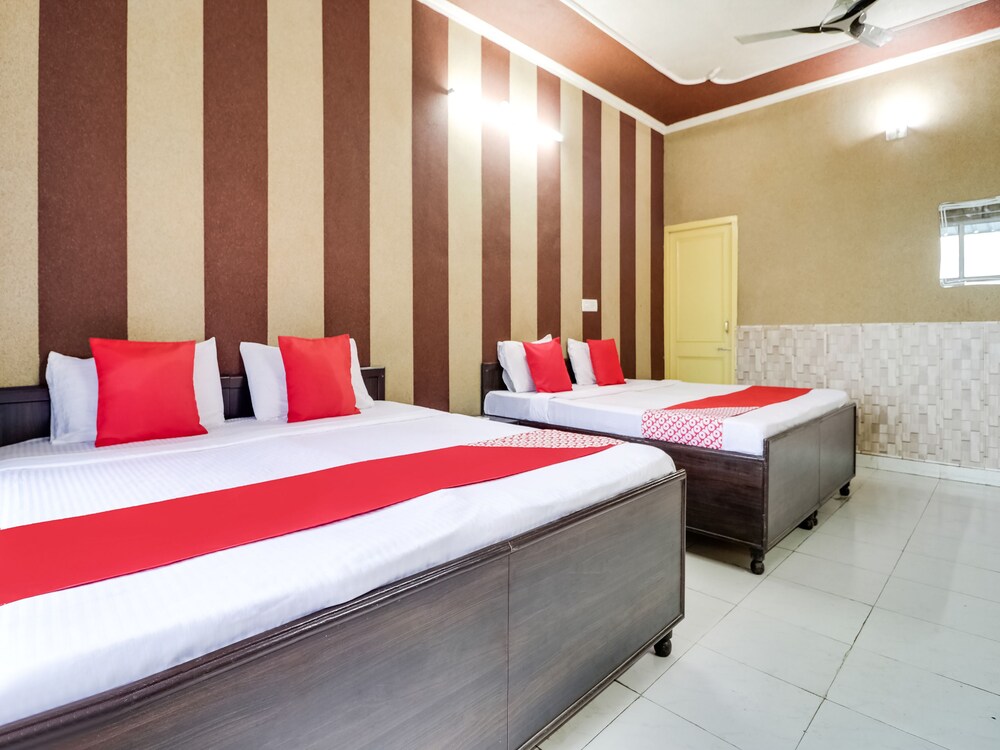
Every hotel we cover in Anandpur Sahib
- Hotel temple view inn 3★ · 4.5/5
- The Regent Hotel 2★ · 0.2 km away
- Hotel Holy City Paradise Inn 2★ · 3.7/5 · 0.6 km away
- Anand at the Satluj 3★ · 0.6 km away
- Hotel White City 2★ · 1 km away
- Hotel Heritage Lodge 2★ · 1.1 km away
- Oyo 46131 Hotel Arora 3★ · 3.7/5 · 1.3 km away
- OYO 39889 Palace Plaza 2★ · 4.2/5 · 1.5 km away
- The Kikar Lodge 3★ · 13 km away
- Amritara Olive Trotter 3★ · 17 km away
- Fabhotel Lime Wood 3★ · 4.5/5 · 59 km away
- Casa Bonita A Beautiful Stay 72 km away
- Elegance Beyond Ordinary Stays 73 km away
- King Cliff Muktsar 4★ · 206 km away
- The Metropolitan Hotel and Spa New Delhi 5★ · 4.2/5 · 297 km away
More things to do
All things to do


From the journal
All posts Comparisons & rankings
Hotels with pools in Punjab, ranked
Comparisons & rankings
Hotels with pools in Punjab, ranked
A working shortlist of 9 hotels across Amritsar, Chandigarh, Ludhiana and Mohali where the pool is genuinely usable — not a puddle behind the generator shed.
 Comparisons & rankings
Family-friendly hotels in Punjab, ranked
Comparisons & rankings
Family-friendly hotels in Punjab, ranked
Ten hotels across the state where kids under 10 will not lose their minds and parents will not either — with real notes on pools, kids' menus, and connecting rooms.
 Comparisons & rankings
Family hotels in Amritsar: which belt to book by your kids' ages
Comparisons & rankings
Family hotels in Amritsar: which belt to book by your kids' ages
Amritsar’s family rooms cluster in three belts — Ranjit Avenue near the malls, the Golden Temple walk, and the Airport Road pools — and the right one depends on how old your kids are.